

Last time, I wrote about American Cuba. I described how the country enveloped itself in a web of growth-throttling central planning during the Depression and ended with the following throwaway line: “Needless to say, none of this would have happened had Cuba become an American territory in 1898, let alone a state.”
And in comments, javiero (who should have 10,000 subscribers, at least) wrote: “I guess the obvious argument is: look at Puerto Rico.”1 So let’s look at Puerto Rico!
What is Puerto Rico?
It’s an island in the Caribbean, duh. And a place that produced one of my favorite musical acts ever, Calle 13, and another one that’s, like, okay. (He played the Superbowl. I’m told the kids like him.)
But that’s obviously not what I mean. What I mean is, what is Puerto Rico? It’s not a state, but it’s not independent, so what is it? You’ll hear the phrase “colony” from politically-minded types who like to wave that stupid flag with the light-blue canton or you’ll hear the somewhat longer phrase “organized unincorporated territory of the United States” from most (but not all!) lawyers.
I’m here to tell you that both the politically-minded and (some!) lawyers are wrong. Puerto Rico is just an old-fashioned American territory, the way God and the U.S. Constitution intended, like Ohio before 1803 or Colorado before 1876 or Hawaii before 1959.
Bit by bit, in scattered pieces of legislation, Congress fully extended the Constitution to Puerto Rico. Sure, Congress could pass an “organic act” and declare the Commonwealth to be “incorporated,” but that would change nothing. It is now just an old-fashioned territory, like Arizona used to be.2
Foreign in a domestic sense
Some history: the United States annexed Puerto Rico along with the Philippines in 1898. For purely racial reasons, there was zero support for taking over the Philippines as an ordinary territory, thereby bringing 7 million “Malays” into the American polity. Congress therefore created a special colonial status for the Philippines, under which the U.S. government would exercise sovereignty but within which the U.S. Constitution would not apply. That status was extended to Puerto Rico (essentially by default) and the Supreme Court ratified it in the infamous insular cases, which ruled that Puerto Rico was “foreign in a domestic sense.”
First, it meant that Puerto Ricans were not automatically American citizens. They could keep Spanish citizenship (one of my grandfathers did) or adopt a separate Puerto Rican citizenship. Now, this didn’t mean that Puerto Ricans were foreigners, either. In 1902, the fiancé of one Isabel González traveled to Staten Island in order to take a job at a factory where Isabel’s older brother Luis already worked. The plan was for Isabel to join him later. But when Isabel got off the boat in 1902, she was declared an alien, and therefore subject to the immigration laws that prevented entry to anyone likely to become a public charge.
As you might imagine, an unaccompanied unmarried pregnant woman qualified as “likely to become a public charge.” Fortunately for Isabel, her brother and uncle made it to Ellis Island from their home in Staten Island the next day. Unfortunately for her, her fiancé wasn’t allowed off work to testify. So the authorities dug in and upheld her exclusion.
Unfortunately for the authorities, González was a very stubborn woman. She also had access to top-notch lawyers through her uncle, Domingo Collazo, who’d lived in the United States as an exile for decades and who had actually gone back to Puerto Rico as part of the American expeditionary force that took the island. He got a prominent lawyer, Charles LeBarbier, into the act, as did Puerto Rico’s nonvoting Congressional delegate, Federico Degetau.
That legal firepower meant that González could take her case all the way to the Supreme Court, which ruled 9-0 in González v. Williams that Puerto Ricans were not aliens and therefore could not be excluded from the mainland under the immigration laws. But it also didn’t say that they were American citizens.3
Second, Congress could regulate commerce with the island. This was an obvious problem for an island dependent on coffee exports and hoping to develop a sugar industry. Now, Congress didn’t tariff the island very heavily or for very long: the Foraker Act of 1900 declared that Puerto Rico would come fully under the U.S. tariff wall by March 1st, 1902. But it could, whenever it wanted to.
Finally, Constitutional protections did not extend to the island. The Bill of Rights simply did not apply. Congress could pretty much do anything it wanted to do.
Domestic in a domestic sense
None of this is true anymore.
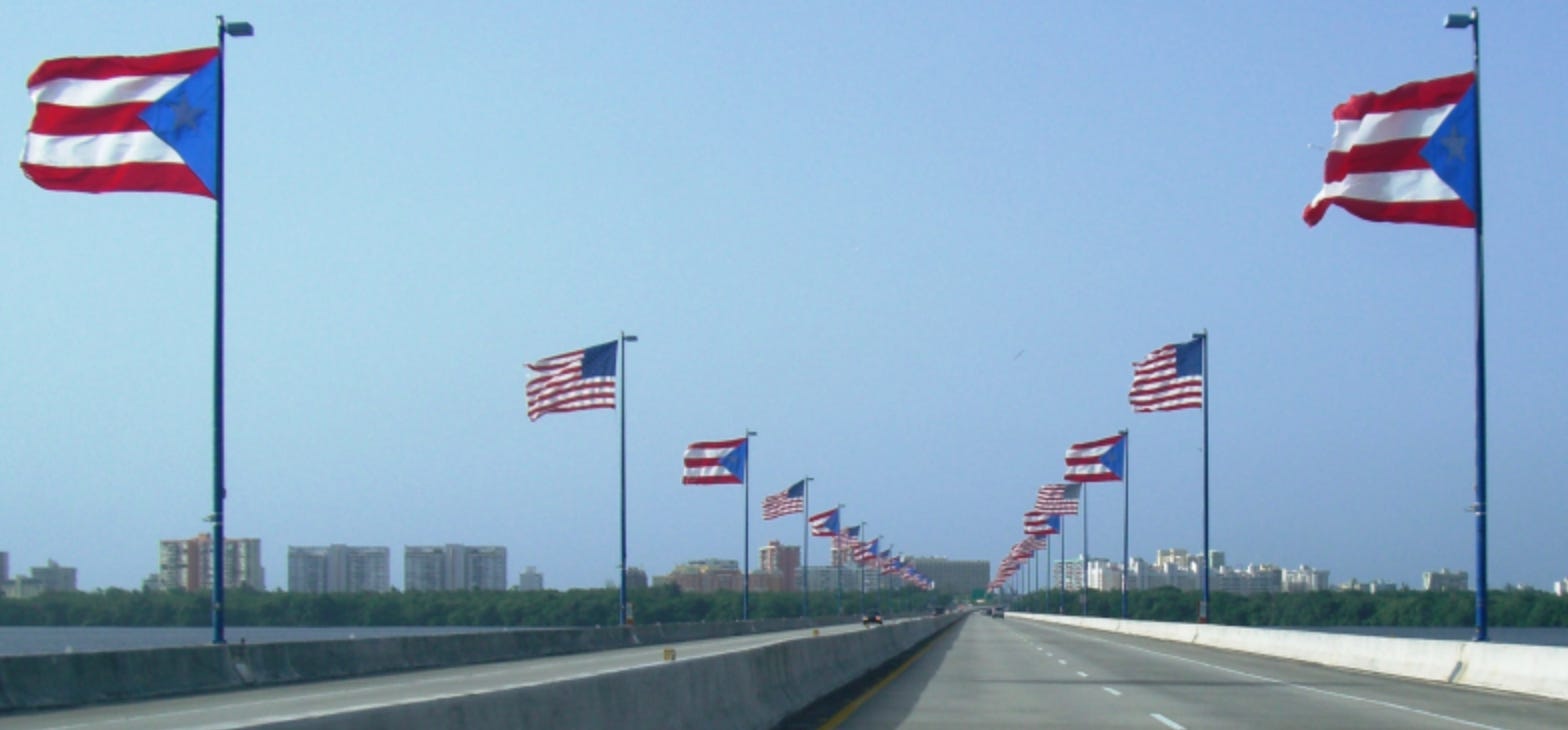
Congress and the Supreme Court slowly extended the Constitution to Puerto Rico. In 1902, the island became part of the American customs area, equal to any other part of the United States. In 1917, Puerto Ricans became American citizens. In 1947, Congress extended Article IV, Section 3 of the Constitution to the island. In 1952, it went further, declaring that anyone born in Puerto Rico (regardless of parental citizenship) would be a citizen. The Supreme Court then extended the 1st, 4th, 5th, 11th and 14th amendments to the territory; extending the 14th brought along the 6th and 8th amendments with it.
In 1922, SCOTUS decided that the 7th Amendment, which guarantees a jury trial in civil cases, does not apply to Puerto Rican courts. But it does not apply to state courts, either: in 1877, in Pearson v. Yewdall, the Supreme Court held that the 14th Amendment does not does not require state laws to follow the 7th Amendment. In federal courts in Puerto Rico, the 7th Amendment has applied since 1922.
What about criminal law? Didn’t the Supreme Court recently rule that someone could not be tried separately in federal and Puerto Rican courts? Well, yes it did, but the logic of 2016’s Puerto Rico v. Sanchez Valle stated only that Puerto Rico was not a state, sovereign under the 11th Amendment. Rather, it was a creation of Congress. But all that did was give Puerto Rico the same status as any pre-1959 territorial government; territorial courts are a subset of the federal judicial system rather than the creation of an independent sovereignty.
Puerto Rico is indeed treated differently in terms of federal funding — a big part of the Puerto Rican debt crisis came from the fact that Congress decided to fund Medicaid at a far lower rate on the island. Was it able to do that because Puerto Rico was “unincorporated”? No. In United States v. Vaello Madero (2021), the Supreme Court said that Congress may treat territories differently under the Territorial Clause of the Constitution, with no need to rely on the incorporated-unincorporated distinction. Alaska was similarly shortchanged for federal highway money before statehood.
That leaves the income tax exemption. (Alaskans paid income taxes before statehood.) Puerto Ricans don’t pay because of 48 U.S. Code § 734. In other words, Congress exempted the island in 1917. Could it have done that with an incorporated territory? Yes. After all, nobody doubts the constitutionality of the Empowerment Zones, which provide tax exemptions for investors and businesses that set up shop inside them. We can also turn once again to United States v. Vaello Madero, which made no mention of any special doctrines about “unincorporated” territories to justify different treatment. In fact, Justice Gorsuch wrote a beautiful and blistering concurrence in which he blasted the Court for not taking the opportunity to overturn the entire distinction while it was at it.4
In other words, Congress can exempt territories from various taxes as it pleases. Incorporation or its absence has nothing to do with it.
Finally, the courts have defined Puerto Ricans as natural-born American citizens. It is extremely hard to strip a natural-born American of their citizenship. Taking out a foreign nationality will not do it. Hell, not even serving in the armed forces of another state will do it.5 (My uncle Eddie served in the IDF; he kept his U.S. citizenship.) The law states “A person who is a national of the United States whether by birth or naturalization, shall lose his nationality by voluntarily performing any of the following acts with the intention of relinquishing United States nationality.”
That is, of course, only a law. It could be changed, but the change would only apply to naturalized citizens (maybe), and perhaps not even that: Afroyim v. Rusk (1967) held that Congress cannot strip Americans of their citizenship against their will. Interestingly, the Court used originalist language to justify that decision:
The Constitution, of course, grants Congress no express power to strip people of their citizenship, whether, in the exercise of the implied power to regulate foreign affairs or in the exercise of any specifically granted power.
So let’s recap:
Congress and the courts have extended all the major constitutional protections that applied to old-fashioned “organized incorporated territories” as existed before 1959.
Puerto Ricans are natural-born citizens and not aliens or American nationals, like Samoans.
Congress legislates for Puerto Rico under the same constitutional clauses that it used for old-fashioned territories.
The incorporated/unincorporated distinction is not doing visible work in Puerto Rico’s differential treatment regarding federal taxes and benefits.
Puerto Rico’s remaining differences from states look like differences of territorial status, not evidence of “foreignness” or deriving from “unincorporated” status.
In other words, Puerto Rico isn’t a state, but it’s far from a colony. It’s an old-fashioned territory, enough to make any constitutional conservative happy. And in fact, there is one (so far solo) federal court decision affirming that argument. In the words of Judge Gustavo Gelpi, writing in Consejo de Salud Playa de Ponce v. Rullan:
Actions speak louder than words. Although Congress has never enacted any affirmative language such as ‘Puerto Rico is hereby an incorporated territory,’ its sequence of legislative actions from 1900 to present has in fact incorporated the territory.
So how has Puerto Rico done?
Great.
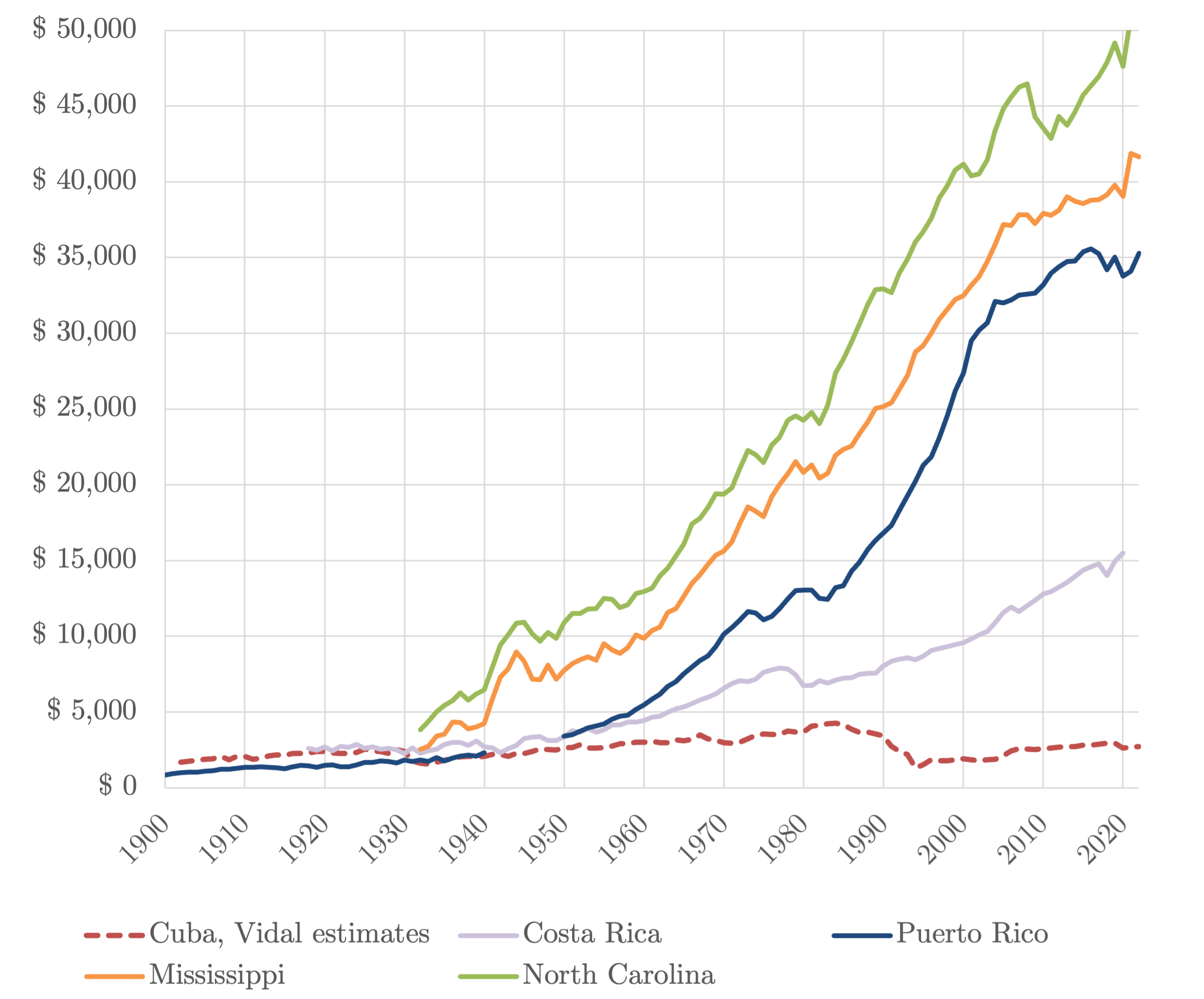
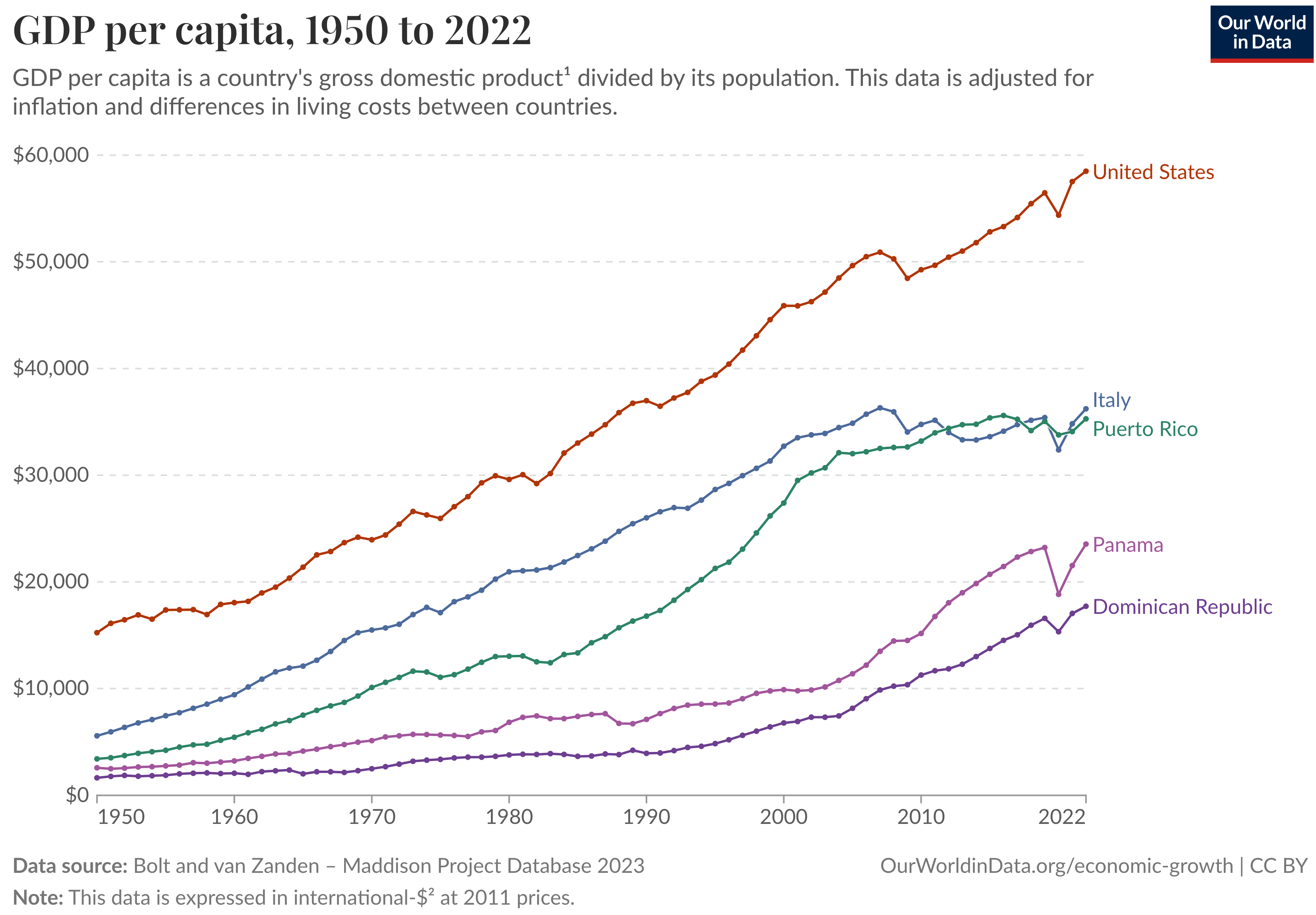
In the postwar decades, Puerto Rico grew astonishingly fast. By the time the model petered out around 2004, the island’s per capita income was within striking distance of Mississippi and catching up to North Carolina. That is a simply phenomenal rate of growth. Now, some may say that growth was caused by two factors: (a) free emigration to the United States, and (b) large subsidies from the United States — but both of those are benefits of being part of the United States!
From the point of view of Cuba or Costa Rica, Puerto Rico entered a whole ‘nother economic universe. Its per capita income currently rivals Italy. (A country which, like Puerto Rico, has faced a lost two decades in terms of economic growth.) And all you need to do is travel around Puerto Rico to see this. It’s not as picturesque as Italy and the transport network isn’t as good, but it’s obvious that Puerto Rico is a developed country.
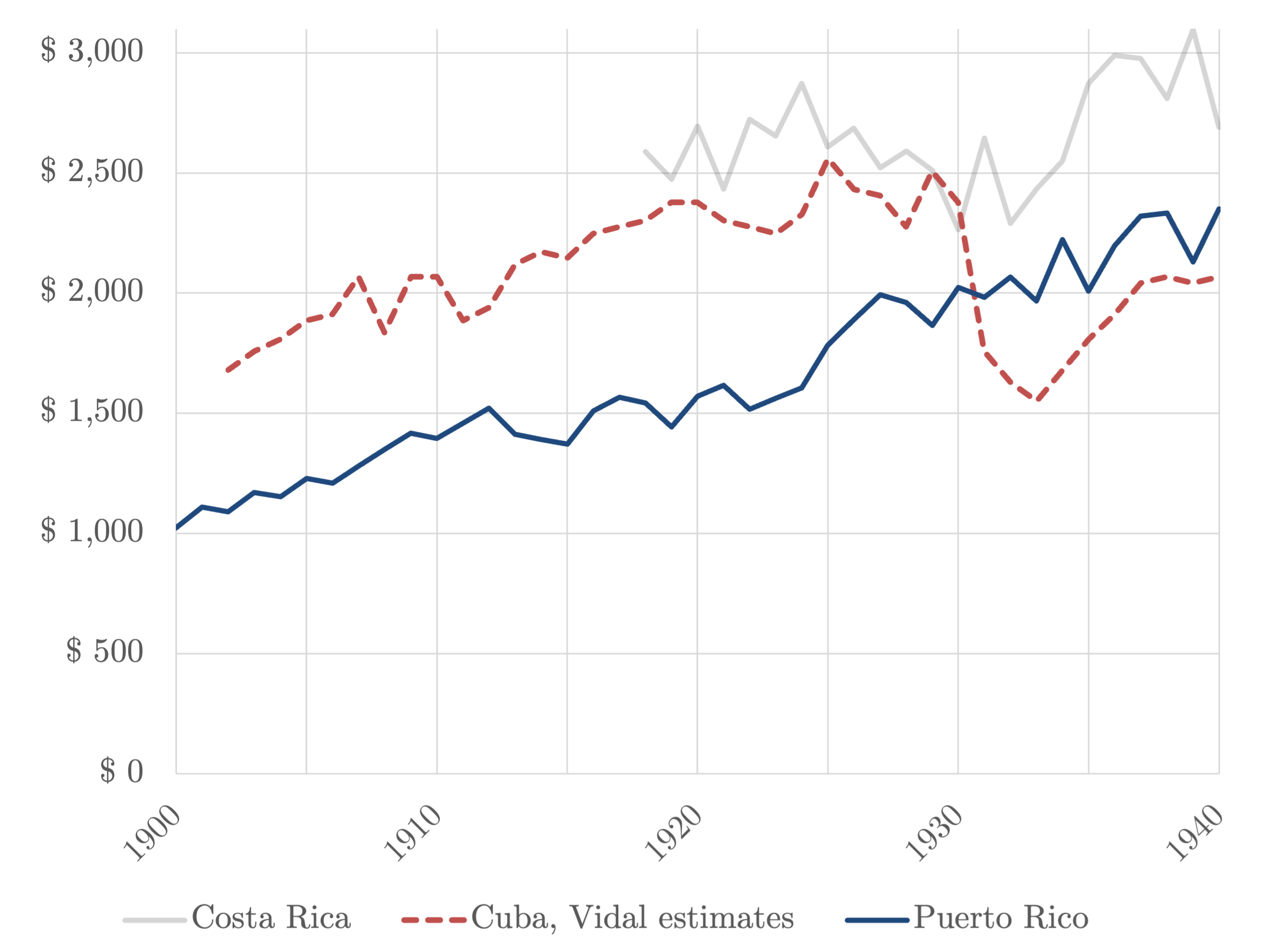
Less known is that Puerto Rico also did pretty well before World War 2. It caught up to Cuba and Costa Rica and avoided the worst vicissitudes of the Great Depression. Its GDP per capita more than doubled in the four decades after it became an American territory, for an annual growth rate of 2.6%. That’s not extraordinarily fast by modern standards, but it’s pretty good for the early 20th century. And it happened at a time when few Puerto Ricans emigrated to the mainland and the federal government was very stingy with its subsidies.
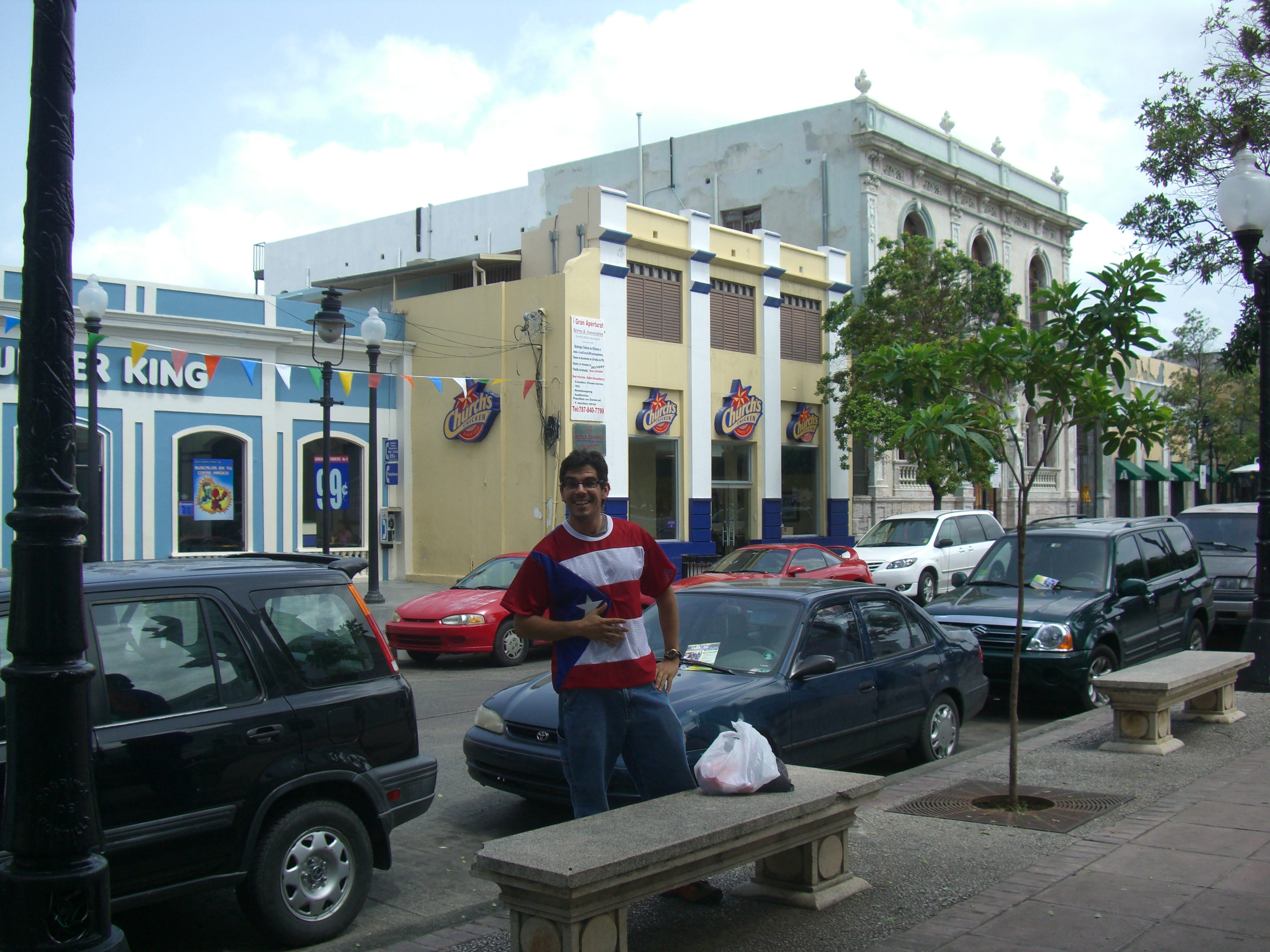
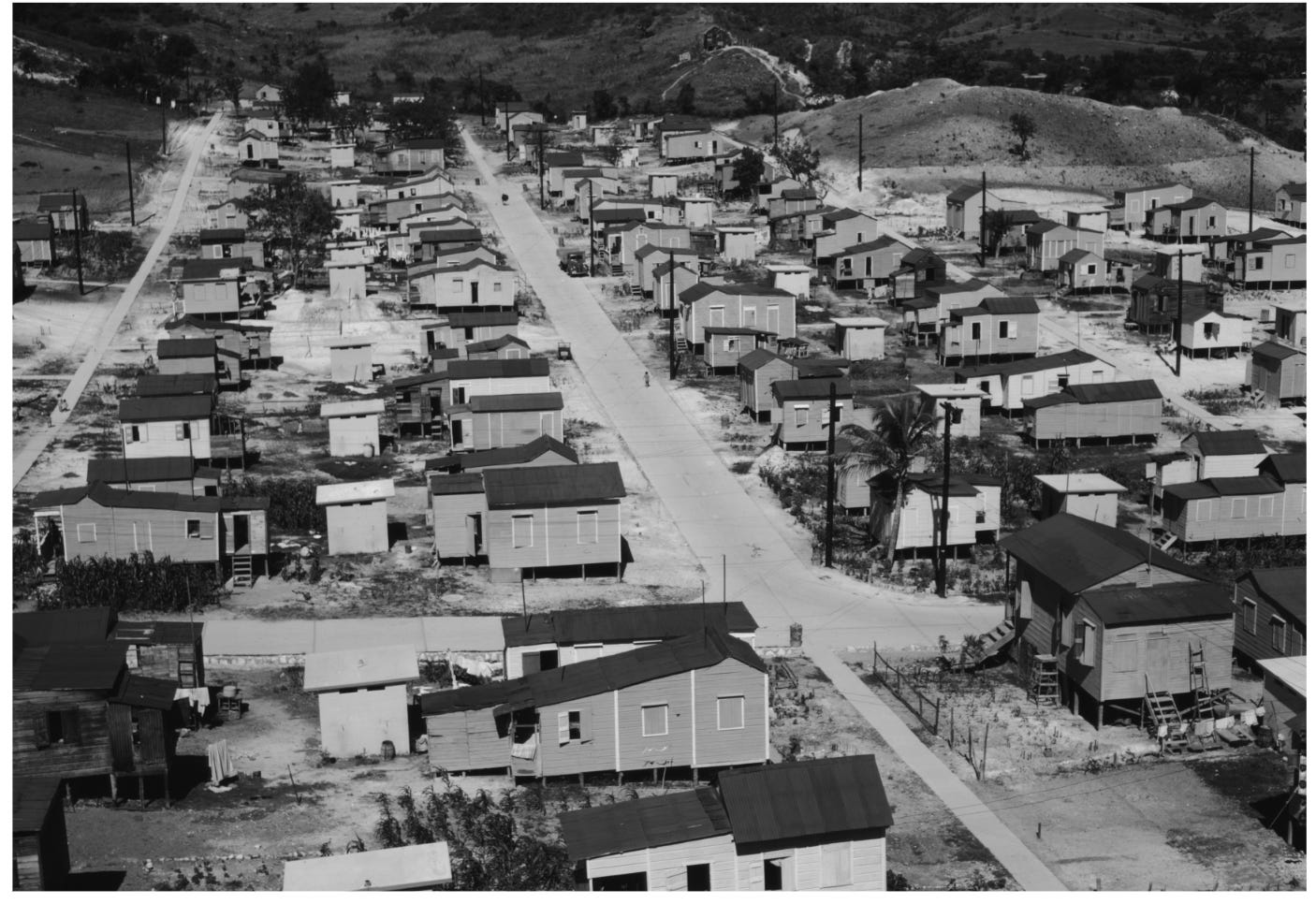
Moreover, this growth was a revolutionary change in the island’s lived experience. In 1900, its income was on a par with places like Burundi or the D.R. Congo in 2024 — well above subsistence, yes, but still desperately impoverished. In 1940, Puerto Rico remained a poor country, but now on a par with Latin American norms. Living standards were not good — only 14% of housing units had a private indoor flush toilet in 1940, for example (page 21) and only 29% were wired for electricity (page 24) — but even those miserable conditions were a massive improvement over the island’s destitution around the turn of the 20th century. After all, in 1899 only 1% of the island’s dwellings had “toilets” (pages 110-11) — and few of those were real flush toilets, instead mostly cisterns relying on lime or dry clay to soak up the “foul odors.”
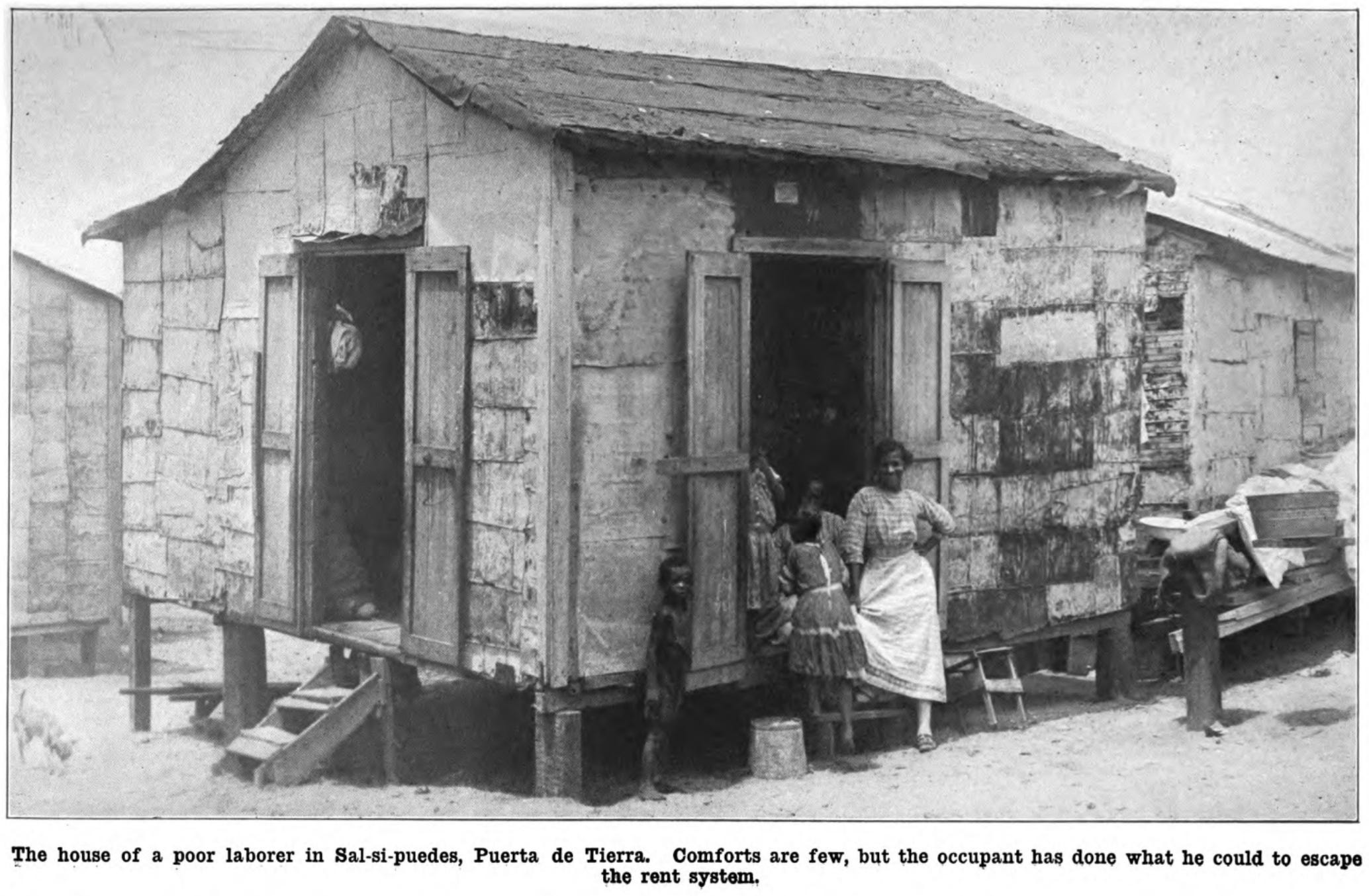
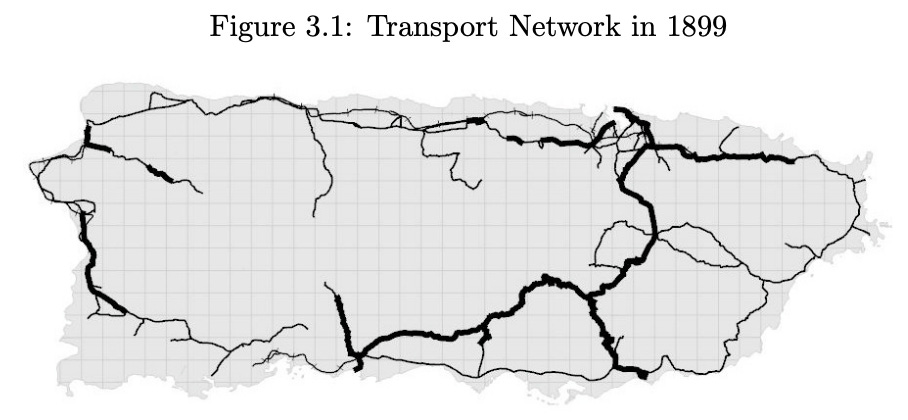
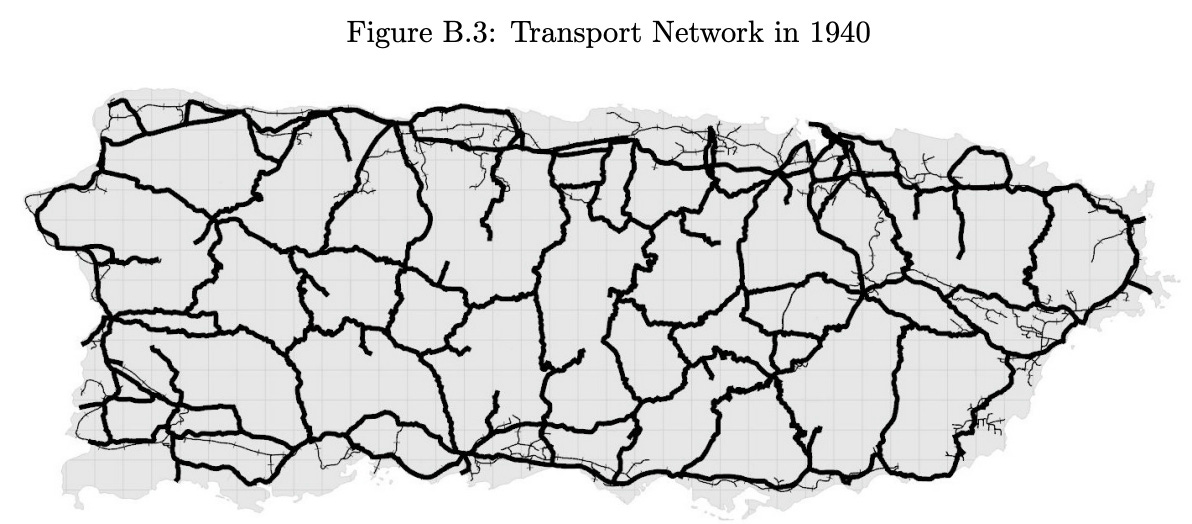
Other indicators improved as dramatically. Life expectancy went from around 30 to 46.4. Literacy increased from 22 percent of the population above age 10 in 1899 to 60 percent by 1940. Surfaced roads went from 275 kilometers in 1899 to 2,394 kilometers by 1940. As a result, transportation costs fell between 50 and 70 percent in the first decade of American rule. The result was an export boom, even before you add in the benefit of being inside the American customs area.
By 1940, Puerto Rico no longer lived on the edge of famine, even if malnutrition remained widespread. According to Brian Marein, male heights increased by 4.2 centimeters between 1890 and 1940, and Puerto Ricans became the tallest Latin Americans outside Argentina and Uruguay. In 1930 — yes, under the Hoover Administration — the federal government began paying to provide milk to infants and school-age children at stations established around the island. The New Deal expanded those programs and added investments in housing, sewers, and electricity. By mainland standards, Puerto Rico was still desperately poor — even Mississippi outdistanced it in 1940. But by southern European standards, the island fit right in: richer than Romania, on par with Portugal, slightly less than Spain. And in Latin America, only the Southern Cone was significantly better off.
Three things underpinned the island’s prewar growth. First, agriculture. Unlike Cuba, Puerto Rico was firmly inside the American tariff wall. So sugar and tobacco production grew rapidly after annexation. Not only that, protection made Puerto Rican sugar resilient to downturns (unlike Cuba): as the Great Depression gathered force in 1928-34, mainland agricultural output fell 12% whereas Puerto Rican output rose by 26%.
Second, cheap wages fueled a textile boom. The Depression sent New England mill owners in search of cheaper labor and prompted a production exodus to the island. Mainland textile output collapsed by 30% in 1928-34, but Puerto Rican production surged by an astonishing 128%.6
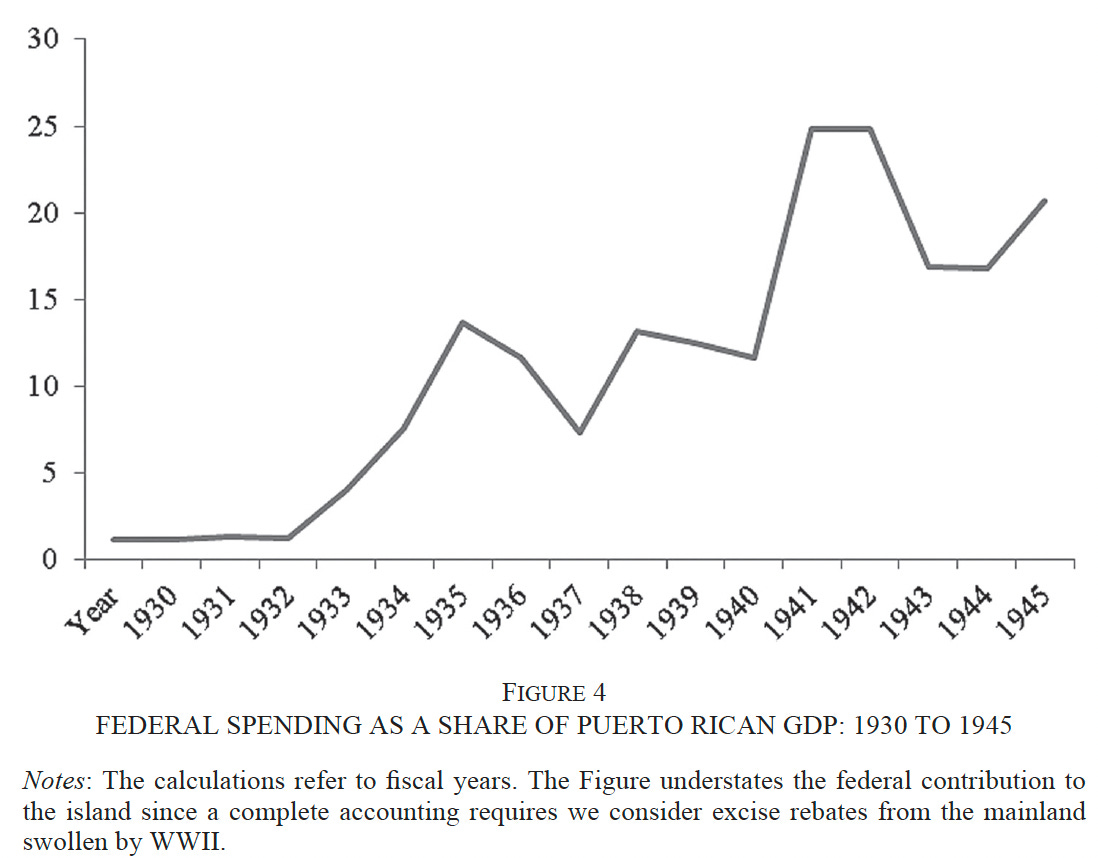
Finally, the New Deal cushioned the Great Depression. Federal spending rose from basically nothing in 1930 to around a fifth of economic output in 1945. That powered a lot of construction jobs and built a lot of very useful infrastructure.
The exhaustion of the Puerto Rican growth model in the early 21st century has been a tragedy. The travails of the island’s power sector are unworthy of a rich nation. Hurricane María was a disaster. Its second population exodus — making Central Florida great again — is terrible for the island. But at the end of the day, we’re talking stagnation rather than collapse … and stagnation at an extraordinarily high income level. The economic miracle was a real one — few today would prefer the dynamism of Panama or the D.R. over Puerto Rico’s wealthy torpor.
And who’s to say that good times can’t come again?
Applications to a Cuban counterfactual
So what does this history say about the prospects of a genuine American Cuba, where it became part of the United States in 1898?
Easy: they’d be phenomenal.
The first channel would be via the American customs area. With no trade barriers, sugar production would have exploded, nipping the mainland beet sugar industry in the bud. In addition, textile, tobacco, and tropical fruit production would have surged. The size of those surges would depend upon how low Cuban costs could go, but they would certainly happen.
The second would be fiscal. Railroads and paved roads would have expanded much further and much faster — even when not directly financed by the local government, investors would be far more willing to risk their capital in a U.S. territory than they were in an independent republic, even one under explicit American protection. Then, during the Depression, the place would have been flooded with federal money. As a share of GDP, that support would likely be smaller than Puerto Rico, but only because Cuba would be richer. In absolute terms, its impossible to imagine Cuba receiving less than its fellow Caribbean island.
Finally, Cuban politics would be much better. The problem with actual Cuba after 1934 was not simply that Machado had wrecked the state. It was that the successor regime settled into a durable political economy of quotas, protection, and restraints on trade. Government policy deliberately stifled innovation and the adoption of new technology. The resulting inefficient apparatus had to be protected from foreign competition with a high tariff wall.
An American Cuba could not do that. Even if a hypothetical Cuban territorial (or state) government tried to implement such a web of controls, the federal courts would not let them. Lots of American states tried and failed. In Baldwin v. Seelig the Court struck down New York’s attempt to keep out lower-priced Vermont milk. In Hood v. Du Mond it struck down New York’s denial of a business license where the point was to limit interstate shipments and protect local economic interests. In Dean Milk v. City of Madison it invalidated a local-processing rule that reserved a city market for nearby producers. In Polar Ice Cream v. Florida Milk Commission it invalidated Florida rules that forced a distributor to buy from designated local producers at fixed prices. In West Lynn Creamery v. Healy it invalidated a Massachusetts scheme that assessed all milk sold in the state but rebated the proceeds only to Massachusetts farmers. If these didn’t survive court scrutiny, it’s unlikely that Cuba’s baroque web of rules would have.
That is not to say that every post-1934 Cuban rule would have been laughed out of federal court. (See footnote seven —> 7 ) It is to say that the core devices of Cuban “risk-free capitalism,” as outlined in the last post, would have been both illegal and self-defeating in an American Cuba. Illegal, because federal law empowered American courts to block attempts to reserve markets, restrain interstate commerce, legalize collusion, or favor local producers. Self-defeating, because if Cuba were inside the American customs area, then the island’s businesses would have no separate tariff wall behind which to hide. Cuban firms would face mainland competitors free of Cuban restrictions. Under those circumstances, business and labor support for the regulations would rapidly slip away.
To speculate a bit, Cuba probably would not have remained a territory for very long. Territorial status has been unstable enough in Puerto Rico. In Cuba, with a larger and more sophisticated political class and a far stronger sense of national identity, long-term relegation to the territorial league would likely have been impossible. If that’s correct, and Cuba became a state, then the relevant counterfactual to American Cuba wouldn’t be Puerto Rico; it would be Florida, with the island receiving even more federal spending and steady stream of gringo migrants coming to work, establish businesses, or retire.
There are few other places on Earth besides Cuba where the gap between what is and what realistically could have been is so large.
If only it could have failed like Puerto Rico. Most countries should aspire to fail like Puerto Rico.
He may have meant this as a show of support for my argument, of course! But it gave me the excuse to get a little brain workout by writing this, so I’m gonna pretend that he’s taking issue with me.
This is not true of the Commonwealth of the Northern Marianas Islands (CNMI) or American Samoa! That’s the main reason SCOTUS ties itself in knots to avoid overturning the “insular decisions” that created the distinction. It would cause too big a mess in those countries.
That decision laid the groundwork for Philippine independence. When anti-Filipino riots broke out across California in 1930, the only way that Congress could restrict Philippine immigration was to grant sovereignty to the Philippine Islands.
See footnote 2 for why SCOTUS doesn’t want to overturn the Insular Cases if it doesn’t have to, even though none of the justices will defend them.
I’m a Dutch citizen via my mother, but I nonetheless had to actively apply for it — zero legal problem. Admittedly, by then I no longer had a security clearance.
John Devereux, “Arrested development? Puerto Rico in an American century,” The Journal of Economic History 79, no. 3 (2019): 708-735.
One caveat comes from Parker v. Brown (1943), in which SCOTUS let California implement a raisin program that “operates to eliminate competition among producers in respect of the terms of sale (including the price).” The Court did note, however, that Congress could step in and override the program whenever it wanted, since most of California’s raisin crop was sold outside the state.
Thanks for this! (and I'm truly honored to have been mentioned)
> First, agriculture. Unlike Cuba, Puerto Rico was firmly inside the American tariff wall. So sugar and tobacco production grew rapidly after annexation.
I hadn't thought of this before, but while reading Victor Bulmer-Thomas' economic history of the Caribbean I came across a mention of Puerto Rico's Chardón plan, and decided to read some more on it (*). The plan, written in 1935 by then head of the Puerto Rico Reconstruction Administration Carlos Chardón, has this to say about coffee:
"Coffee is, from the point of view of social welfare, a very desirable crop for Puerto Rico. It is now in ruins due to hurricanes, low prices, and lack of credit facilities. Its production in the past has often reached half a million quintals. It is now 90,000 quintals.... From a social and technical point of view, coffee rehabilitation requires: Cheap hurricane insurance; cheap production credits; cheap fertilizers; reforestation, development of seedbeds, to make the present recovery and future recoveries from hurricanes as rapid as possible;"
I'd never thought before about the connection between coffee and hurricanes. Now that I think about it, it's very risky to plant coffee in hurricane prone regions (at least compared to non-hurricane prone regions). Losing cane sugar that's been growing for three or four months is not such a big deal compared to losing coffee shrubs that need several years to grow to maturity. And even if it can be insured, it's probably not cheap to do so. This might help explain why Puerto Rican sugar and tobacco took off, but coffee didn't (which kind of surprised me at first).
(*) https://pgt.uprrp.edu/planes1930/en/the-chardon-plan
Argentina (plus its neighbour Uruguay to a degree) is another country "where the gap between what is and what realistically could have been is so large".