

Cuba didn’t immediately turn Communist in 1959. In fact, it wasn’t clear to most observers just what the Movimiento 26 de Julio was all about, other than removing the corrupt Batista regime.
This post has three sections. The first describes how Cuba and the United States descended into deep hostility. The second explains Cuba’s attempts to impose central planning and how it became dependent upon Soviet subsidies. The third describes how Castro somehow managed to wag the Soviet dog (at least in foreign policy) despite its dependence.
(1) Jump or pushed?
There’s an active debate over whether Castro was always a Soviet sympathizer or whether the United States drove him into their arms. There is little doubt that he was a leftist. But there is a lot of doubt as to whether he would have settled for a position like Indonesia or Yugoslavia; that is, a one-party state running a highly socialist economy, but opposed (more or less) to Moscow.
For what it’s worth, both the CIA and Richard Nixon thought a neutral Cuba under Castro was possible. At a meeting of the National Security Council on December 23, 1958, with the Batista government in full collapse, CIA director Allen Dulles gave his agency’s appraisal of Castro: “The Communists appear to have penetrated the Castro movement, despite some effort by Fidel to keep them out.” [Italics mine.] Immediately upon taking power, the rebels replaced the Constitution of 1940 with a “Fundamental Law” that prohibited confiscation. Four months later, in April ‘59, a victorious Castro went to Washington. He personally met with Vice-President Nixon, who wrote:
My own appraisal of him as a man is somewhat mixed. The one fact we can be sure of is that he has those indefinable qualities which make him a leader of men. ... He is either incredibly naive about Communism or under Communist discipline — my guess is the former. ... because he has the power to lead to which I have referred, we have no choice but at least to try to orient him in the right direction.
Many historians, myself included, have seized on these and other statements to conclude that Castro’s Cuba was not fated to become part of the Soviet Empire.1
But the debate is moot. Why? The reason wasn’t the implacable anti-Communism of the Eisenhower administration. Nor was it some inevitable affinity between Havana’s new rulers and Nikita Khrushchev. No, the reason the debate is moot is that American investors were never going to sit back and watch Mr. Castro seize their properties. They were going to scream bloody murder, and in a country like the United States, no administration would be able to sit idly by and ignore them, no matter how much doing so might be in the national interest. A tit-for-tat series of provocations was inevitable, and in the context of the Cold War, that would have driven any leftist government, no matter how moderate, into Moscow’s arms.
(I wrote a book about this problem called The Empire Trap; its main thesis is that U.S. foreign policy has been just as subject to interest-group capture as its domestic policy. All uncited claims below are from my book.)
Washington tries hard to do nothing
The Cubans declared land reform on May 17, 1959. The Agrarian Reform Act limited individual landholdings to roughly 1½ square miles but allowed sugar and cattle holdings as large as five square miles. No non-Cubans (or foreign corporations) would be allowed to purchase rural property in the future. Current shareholders in corporations that grew sugarcane would have to divest any shares in a corporation that processed sugarcane. As a result, sugar processors lost about 2 million acres.
Cuba lacked sufficient dollars to pay cash compensation, so it offered nontransferable 20-year bonds with an interest rate capped at 4.5%, a mere 12 basis points above the rate on 10-year U.S. government securities. Moreover, the law valued the properties at their 1958 appraisals.2
The U.S. government reacted moderately. This was Dwight Eisenhower. It accepted the use of appraised value and merely requested that Cuba pay in “long-term bonds that would be marketable and would be payable in dollars.”
U.S. investors? Not so much. Robert Kleberg, a Texan with extensive Cuban holdings, complained to the Senate majority leader — one Lyndon Baines Johnson. They went way back: LBJ’s first job in Washington had been as a staffer to one Richard Kleberg, the “cowboy congressman.” As importantly, Assistant Secretary of State for Inter-American Affairs Roy Rubottom and Assistant Secretary of State for Economic Affairs Thomas Mann were both from Texas. These Texan connections mattered — if Kleberg wanted a meeting with Eisenhower administration officials, Kleberg was gonna get a meeting with Eisenhower administration officials.
And it was in a meeting with Secretary of State Christian Herter on June 24, 1959, that we have our first record of a proposal to cut off Cuba’s ability to sell sugar to the United States. Soon enough, Kleberg got the chance to repeat his proposal to President Eisenhower in the Oval Office.
American sugar interests were split. The refiners backed Mr. Kleberg. But the rest of the American plantation owners disagreed with the Texan: they wanted Washington to ask Cuba for a sugarcane exception to the Agrarian Reform Act. They went so far as to tell the Administration in writing: “Other lands present no real problem — they are not a serious matter.”
Eisenhower did nothing. He wanted to do nothing. Unlike Guatemala in 1954, there were no counter-revolutionaries waiting in the wings to replace Mr. Castro.3 The State Department resolutely recommended that the President do nothing. One 1959 memo stated, “I think our point of departure must be that keeping Cuba out of the Sino-Soviet orbit, and returning it to the Inter-American system, is more important than the salvaging of the U.S. investment in Cuba to the complete satisfaction of the U.S. business community. This is a bitter pill to swallow.” Another read, “Cutting the sugar quota is the ultimate weapon in relations with Cuba,” and recommended doing so only after the Soviet Union took an action “supporting Castro which we consider intolerable.” A third outlined:
The political effects of a quota cut would be: (a) to create hatred of the United States in Cuba and elsewhere in the hemisphere; (b) to increase sympathy for Castro, thereby probably prolonging the tenure of his regime; (c) to give what would be, with perhaps some justification, clear evidence of a policy of economic coercion of a country 90 miles from our shores; and (d) to create for ourselves the eventual problem of trying to pull up Cuba’s weakened economy after Castro has gone.
Even the CIA got into the “don’t do anything!” act. A National Intelligence Estimate dated March 22, 1960, bluntly stated, “We believe that Fidel Castro and his government are not now demonstrably under the domination or control of the international Communist movement.” The estimate went on to state, equally bluntly, that the CIA did not believe that Castro’s regime was vulnerable to falling under such domination. According to the report, damage to America’s strategic interests was being caused by the U.S. reaction to Castro’s policies, not Castro’s actions themselves.
Washington fails to do nothing
And what was the U.S. reaction to which the CIA referred? It wasn’t the Eisenhower administration. Nope. It was Florida. (More accurately, Florida being Florida.) And to a lesser extent, Congress’s, back at a time when Congress acted the way the Founders intended.
In October 1959, Cuban counterrevolutionaries start flying private planes from Florida airstrips carrying white phosphorus bombs and machine guns to strafe Cuban positions, including one in the Havana suburbs. President Eisenhower wants them stopped but fears domestic blowback. So the administration convinces itself that the raids were an unimportant sideshow, which has the advantage of being true, militarily and economically.
But not politically. No Cuban government can ignore attacks from a private air force operating 90 miles away. Castro’s foreign minister writes to the U.S.: “The Cuban people know, from bitter experience, that if the government of the United States sets in motion its formidable system of vigilance and defense it is almost impossible to conspire in its territory, traffic in arms, leave its ports illegally, or take off in airplanes without proper papers.” The U.S. briefly cracks down on the flights after one of them shoots up a passenger train on October 22nd, but then loosens up again, against presidential wishes.
Negotiations over American properties in Cuba go nowhere during the rest of the year, although Fidel kindly (or maybe ominously) tells the U.S. ambassador that he “admires Americans, especially tourists, for whom he is planning great things.”
Nonetheless, in January 1960, President Eisenhower requests that the CIA start preparing contingency plans to overthrow the Cuban government. The bombings step up throughout the month.
On February 14, 1960, the Russians send First Deputy Anastas Mikoyan to Havana, where he negotiates a deal to buy 425,000 tons of sugar in 1960 and one million tons per year through 1964 for 3¢ per pound. This isn’t a Soviet subsidy: Cuban sugar trades at 5.4¢ in the U.S. Cooler heads seem to be getting the upper hand in Washington: on March 22, a National Intelligence Estimate bluntly declares, “We believe that Fidel Castro and his government are not now demonstrably under the domination or control of the international Communist movement.” In fact, the CIA goes on to warn that the danger to U.S. strategic interests comes from U.S. policy towards Castro, not Castro himself.
And then, on March 4th, the Le Coubre explodes in Havana harbor. For those of you who don’t remember Le Coubre — most people don’t — it’s a Belgian freighter filled with munitions for Cuba. These were bought by the Cuban government with Cuban money; they did not come from the Soviet Bloc. Che Guevara rushes down to the scene to help, producing the iconic photo that now graces poseur T-shirts the world over, although I myself much prefer this one:
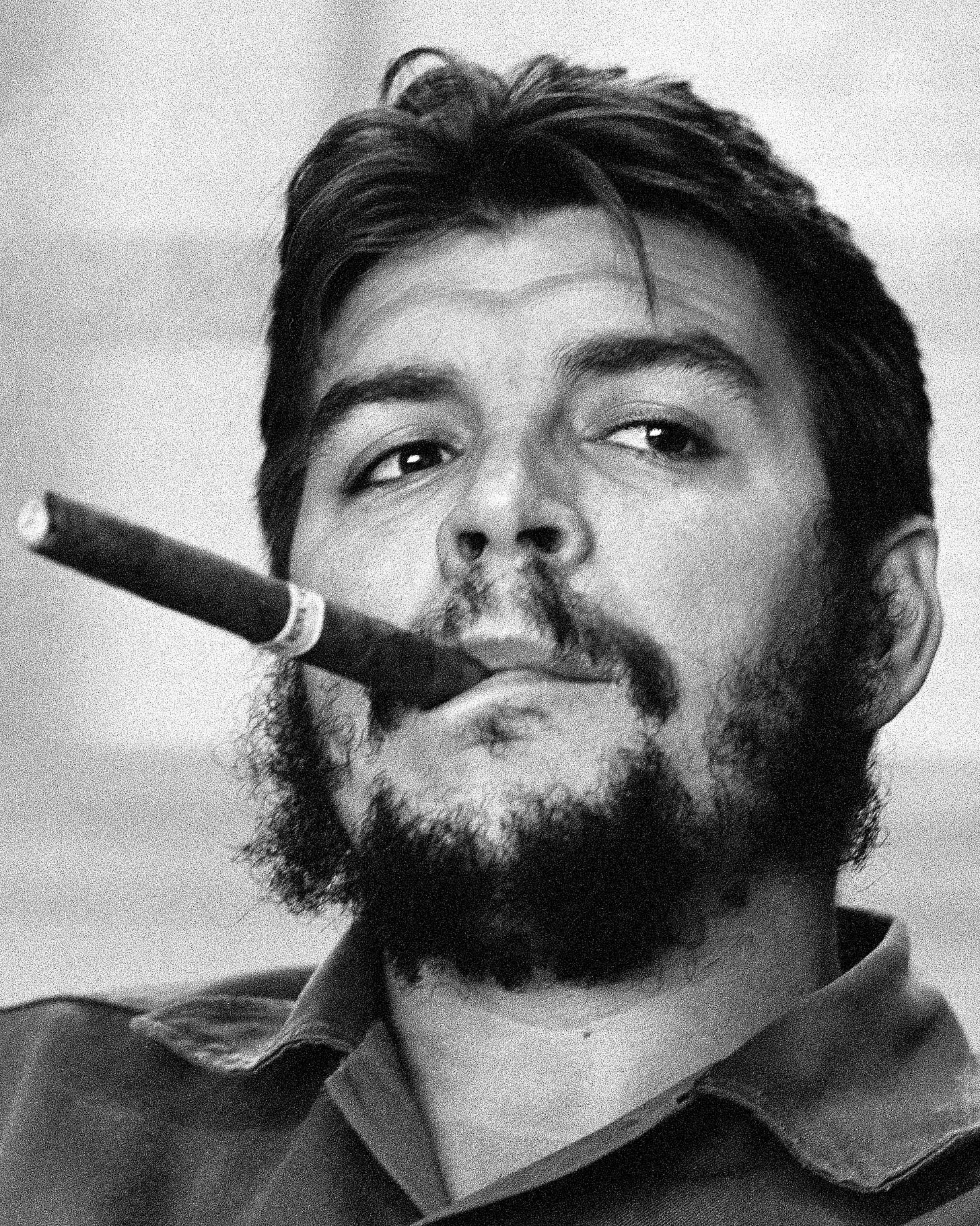
The Cubans blame the Americans for the explosion — the poetic justice given the USS Maine is hard to ignore.4
On March 17, President Eisenhower gives the go-ahead to activate the contingency plans and start actively preparing to overthrow Castro. Eisenhower tells everybody to keep this secret, but that proves not possible, what with training camps in Guatemala being hard to hide. On April 23rd, Cuba’s Foreign Minister, Raúl Roa, says as much in a public speech.
On May 31st, Castro asks American-owned refineries to process Soviet crude oil. The companies say no.5 On June 28th, Castro takes over the refineries.
The next day a sanctions bill hits Congress. It passes 396-0 in the House and 84-0 in the Senate. The bill cuts Cuba’s sugar quota from 3.1 million tons to 2.4 million, effectively kiboshing Cuban exports for the rest of the calendar year.
Castro retaliates by expropriating all American-owned property on the island — with compensation to be paid from sugar revenues earned on sales to the United States above the pre-existing quota and price. (Take that, Yankees!)
Finally, on July 9, 1960, Nikita Khrushchev speaks on the Cuban situation before the unlikely forum of the Russian Federative Soviet Republic’s Teacher’s Congress. He thunders to the audience — which includes, symbolically, his own childhood teacher — that as a result of the American “economic blockade,” Cuba would now be under the umbrella of Soviet rocketry:
Soviet artillerymen can support the Cuban people with their rocket fire, should the aggressive forces in the Pentagon dare to start intervention against Cuba. And the Pentagon would be well advised not to forget that, as has been shown by the latest tests, we have rockets which land accurately in a predetermined square target 13,000 kilometers away. This, if you wish, is a warning to those who might like to solve international problems by force and not by reason.6
In case the point wasn’t clear, Che Guevara clarifies the next day before a crowd of 100,000 in Havana:
Cuba is now, in addition, a proud Caribbean island defended by the missiles of the greatest military power in history.
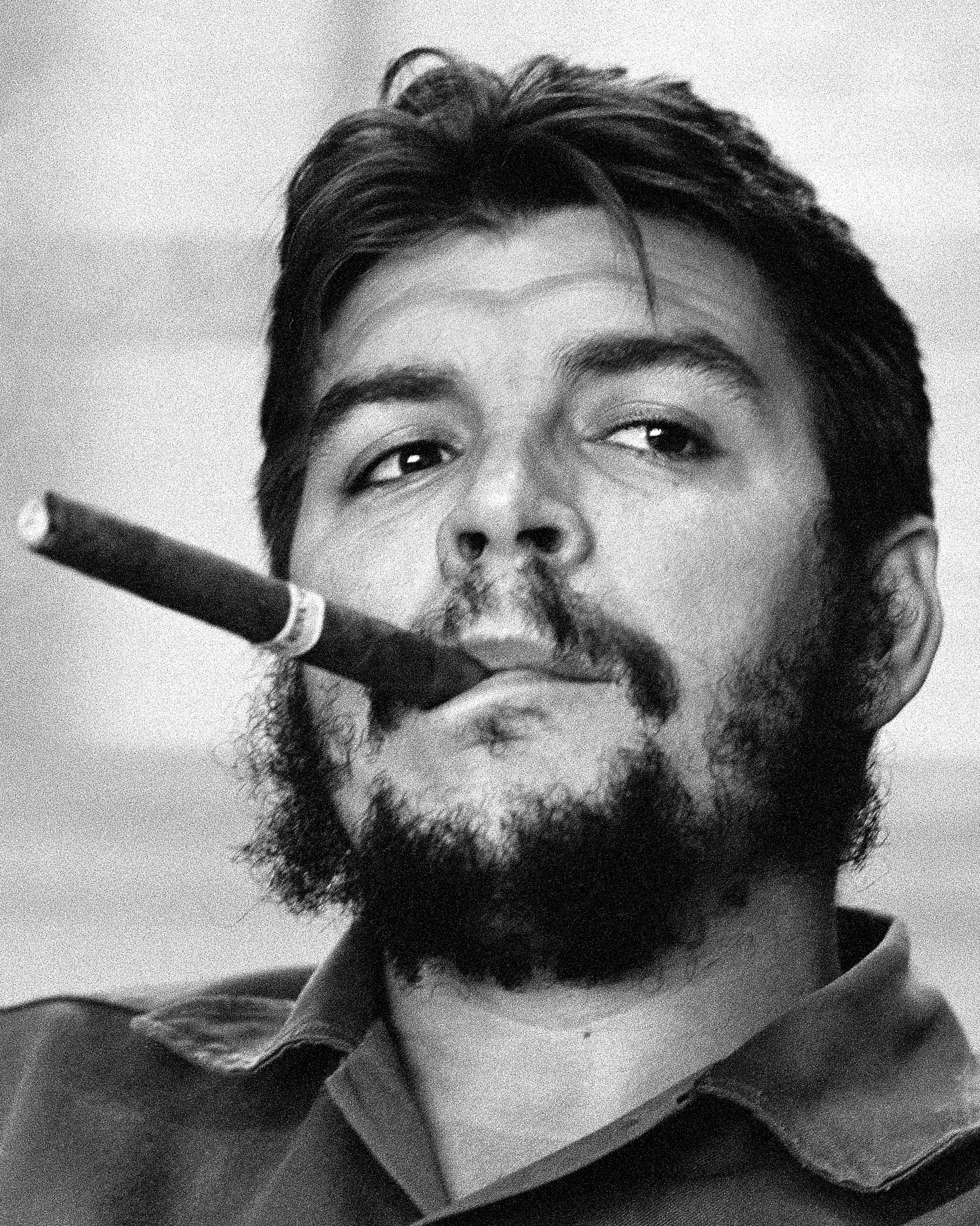
You can imagine how all this goes down in the United States during a presidential election year.
In short, you had two givens in this situation. First, Castro was going to redistribute land. Second, the United States was going to be incapable of containing its political response to the first point. Put those together, and you can see why it doesn’t matter whether Fidel marched into Havana intending to create a socialist state or whether he only decided to become a Communist under American pressure; either way, Cuba was going to join the Soviet Bloc unless the Americans somehow managed to overthrow him first. Which they emphatically did not manage to do.
The rest is, as the podcast title goes, history.
(2) Joining the Soviet
Cuba soon became more Catholic than the Pope, much to the chagrin of the men in Moscow. Fidel also proclaimed revolution throughout the Third World, announcing that any revolutionary movement could count on Havana. Eventually, in 1972, he had his country join the Soviet. Which is not a typo; read on.
The Cubans first tried crash industrialization. In 1961, Che Guevara drew up a list of targeted industries. Shopping list in hand, he traveled around the Eastern bloc for the needed credits. The biggest investment turned out to be a pencil factory.
Now, there were some impressive commitments: expansions of the existing steel and cement plants, a diesel motor plant, a gigantic textile mill, a ball bearing plant. (Don’t knock the latter!) But these hadn’t been finished by the time the big push runs out of steam in late 1963.
Pretty much everything went wrong.
The problem wasn’t the capital goods, those could be had from the Soviets, the problem was that all these plants required intermediate goods that were in scarce supply in the Eastern bloc … and Cuba’s existing industrial plant required Western spare parts. So Cuba still had to export to the West, except that it had already blown giant holes in its ability to do so: with workers being transferred to industrial projects, sugar production crashed from 6.8 million tons in 1961 to 4.8 million in 1962.
A CIA assessment identified three major problems:
The level of managerial ability. As in, Cuba had almost none. “The evidence indicates that inexperienced management probably has been the principal cause of the decline in industrial production apparent during the last 2 years.”
“Apathy and disaffection within the labor force.” Which isn’t surprising, considering the precocious attempt to create the New Cuban Man. Workers got no raises or bonuses, just exhortations to engage in “socialist emulation.”
Finally, spare parts shortages. It concluded that they were not yet binding, but would become more serious over time, since the Soviets could not easily provide them but Cuba faced hard currency shortages in its trade with the West.
The Cubans recognized pretty early that the plan was off the rails. In September 1961, Fidel started complaining about lazy workers. By March 1962, Guevara himself called it, “An absurd plan, disconnected from reality, with absurd goals and imaginary resources.”7 About the best thing that could be said for the industrialization push was that the Cubans stopped it before it led to mass starvation, unlike the Soviets, Chinese, and (later) Ethiopians.
Unfortunately, what came next wasn’t much better. Against Soviet advice, Cuba pushed to break its need for Eastern Bloc support by increasing exports at all costs. They nationalized all food marketing, so the remaining private farmers had to sell to the state at controlled prices. The Cubans then squeezed wages, in order to generate higher savings … which brilliantly included depriving the best workers of their higher salaries.8 It’s probably less than shocking that a 1968 study found that “one-quarter to one-half the workday was wasted due to overstaffing and poor discipline.”9
The government then drafted the entire male labor force and set everyone who wasn’t needed elsewhere to the sugar fields. Again, as Communist policies go, this was pretty vegetarian — there were no mass casualties, no starvation. But it turned out to be a terrible policy: the Cubans failed to meet their 10 million ton target, but they came close — only to see world sugar prices fall to 2¢ in 1966-69. As a result, Cuba failed to generate hard currency exchange and wound up selling its entire crop to the Eastern Bloc at heavily subsidized prices.10
In short, Cuba became locked into subsidized sugar exports to the Soviet Bloc. Communist countries became Havana’s sole suppliers of oil, coal, iron, cotton, timber, pig, grain, fertilizers, trucks, cars, and most machinery. Cuba increasingly failed to cover the cost of those imports from its Soviet Bloc exports, so it needed more and more balance-of-payments support, which could not be paid back.
Socialists to the rescue
After a lot of lobbying, in 1972, Cuba became a full member of the Council for Mutual Economic Assistance, commonly called Comecon. In Russian, the organization’s acronym was SEV (СЭВ), short for Sovet Ekonomicheskoy Vzaimopomoshchi — literally, the Soviet of Mutual Economic Assistance. Cuba had joined the Soviet. I told you the opening line wasn’t a typo!
Cuba had already received much help from Eastern Europe, but the SEV put it on a formal basis. Cuba (along with Mongolia and North Vietnam) automatically received special status as a developing economy, which which entitled it to balance-of-payments support — e.g., cheap credits whenever imports exceeded exports.
Everyone knew that these arrangements were bad for everyone: an official Polish report declared that Cuba’s SEV dependence was “destabilizing.” In 1974, the Russians tried to pressure Fidel to improve relations with the United States and attract American tourists. With Cuba’s economy still in need of Western inputs, this would also have the salubrious effect of stopping the inexorable growth of the Communist state’s debt to Western banks and taken pressure off the SEV.
You won’t be surprised to know that El Comandante’s response was:
We are in no hurry. We can wait ten or twenty years. Condemnation of the blockade of Cuba is growing, and the North Americans are increasingly isolated. The blockade is harming us, but we can wait. Argentina’s U.S. companies are willing to sell us automobiles. The United States, as well as U.S. businesses, are facing a dilemma. They have to choose between U.S. and Argentine law.11
Well, friendly Argentine governments (under President Juan Perón, and then his successor — and wife — President Isabel Perón) were not going to last. The 1976 coup dropped Cuba further into dependence on the Soviet.
How dependent?
John Devereaux of CUNY did the work. For comparison, he added U.S. aid flows between 1941 (the start of the war) and 1959. In his words, “The results are startling.”
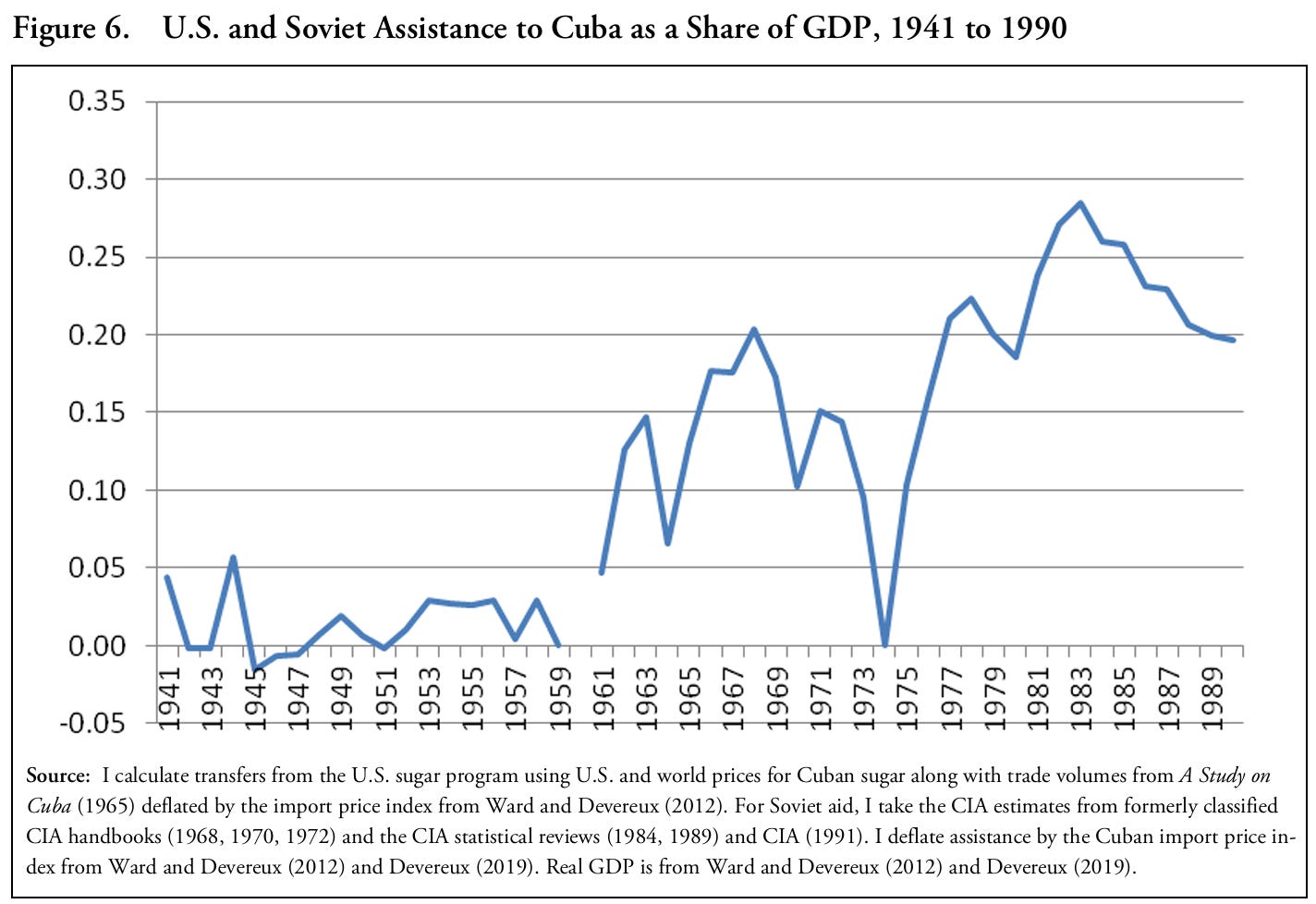
That is simply incredible. Almost the point where I want to check the calculations (and ask what happened in 1974) but Devereux is an excellent economic historian.12 It’s more than farm states get in the U.S., it’s more than the European Union transfers to its poorer states, it’s more than northern Italy gives to the South.
(3) Wagging the Dog
And yet, this poor mendicant state not only managed to institutionalize its subsidy flows — and collect them from all of Eastern Europe, not just the USSR proper — it wound up driving Soviet foreign policy in the 1970s. Angola is where you can see it most clearly, although there are echoes across Africa and (to a lesser extent) Latin America. For space, however, I’ll stick to Angola here.
In the 1960s, Havana and Moscow were often frosty, because Cuba was all-in on Third World revolution, whereas the Soviets thought that would just be a mess.
In 1974, there’s a military coup in Portugal and the new government abruptly declares that is going to quit Angola. Note here that the Portuguese had practically won the war of independence: none of the three main rebel factions were particularly organized or well-armed by this point. In fact, two of them — the openly Marxist Popular Movement for the Liberation of Angola (MPLA) and the American-supported National Front for the Liberation of Angola (FNLA) spent more time fighting each other than the Portuguese.
Anyway, with Portugal out the door at maximum speed, the country looked to fall into the hands of the Marxist-Leninist Movimento Popular de Libertação de Angola (MPLA). The prospect of a Communist Angola right on what was then their northern border did not please the South African government. So it swept across the border on October 14th, before the Portuguese had fully withdrawn.
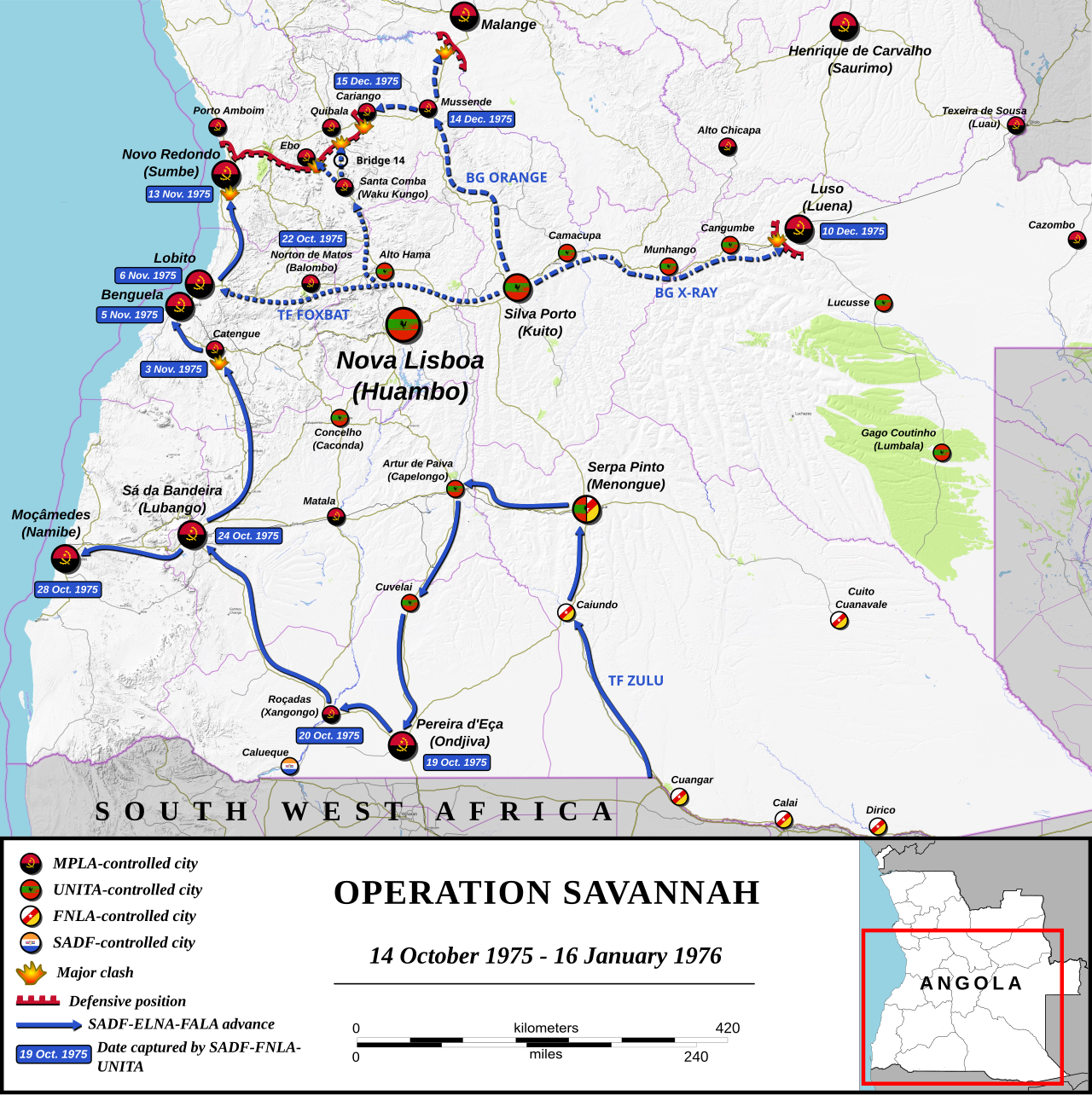
The MPLA folded up in the face of Operation Savannah, which advanced an astonishing 3,159 kilometers in 33 days at a cost of 5 dead and 41 wounded. Gabriel García Márquez (yes, that García Márquez) described it such: “It was like a Sunday drive: the South Africans played festive music on cassette-decks fitted to their tanks.” So things looked pretty bad for the MPLA. There were already a few Cuban trainers in-country, but nothing that could withstand the South African advance.
Now, one thing to keep in mind is just how small this South African force actually was. At its peak, it numbered about 3,000 soldiers, backed by an unknown number of badly-trained members of the non-Communist FNLA independence forces. It was this force that looked set to bring down the MPLA.
And so, on November 4th, 1975, Fidel Castro decided to help out his old African allies. As far as we know, he made this decision without consulting Moscow. So no modern airlift here. Nope. Instead, starting on November 7th, the Cubans cobbled together some ancient Bristol Britannia 318 turbo-props. These planes normally had no way to make it across the Atlantic without refueling but the Americans were not about to let them refuel in the Azores. So the Cubans bolted extra tanks to the Bristol Britannia, flew them out of the easternmost point on the island, and somehow managed to get them all the way to Cape Verde without losing a single plane. The Cubans kept coming; by January over 1,000 soldiers were arriving every week, in five round trip flights.
Cuba was not acting at Moscow’s behest. In fact, Moscow was perfectly willing to cut its losses and write off Angola. After all, it wasn’t like the MPLA had actually taken power; letting it fall would not reverse the Marxist arrow of history. Antoly Dobrynin wrote in his memoirs that Cuba acted “on their own initiative and without consulting us.”13 I could review the evidence that Moscow had no intention to intervene, but it seems sufficient to quote Henry Kissinger in 1999:
We could not imagine that he would act so provocatively so far from home unless he was pressured by Moscow to repay the Soviet Union for its military and economic support. Evidence now available suggests that the opposite was the case.
Once Moscow realized that the Cubans intended to commit more than one 5,000-man division, the Soviet ambassador in Havana asked the Cubans to tone down their support. Which they refused to do.
And that forced Moscow’s hand. It couldn’t stand by in the face of such fraternal socialist bravery! So, finally, in January, it gave the Cubans the use of more modern IL-62 transports. It also agreed to replace all of the equipment the Cubans had brought with them and started to supply the in-country Cubans from Moscow.
The South Africans weren’t prepared for this sort of opposition, so they withdrew. Of course, the war went on and the Cuban presence grew. It’s not clear that the Soviets wanted to get involved at all. And when they did, the Cubans often got in the way — for example, in 1977 the Cubans blocked a Soviet attempt to engineer a coup in Luanda and get rid of the MPLA. The Cubans then proceeded to send thousands of non-combatants to shore up the MPLA’s administration and secret police, not entirely unlike what they’d do in Venezuela a few decades later.14
Ultimately, 337,033 Cuban soldiers and a bit more than 50,000 civilians would serve in Africa — about one-in-seven of all Cuban men who turned 18 between 1975 and 1991.15
Demetropolitanization? It’s a mouthful, but accurate
Cuba wasn’t decolonized so much as the de-metropolitanized: its metropole simply fell apart in 1989-91. The Russian Federation that emerged from the wreckage had little ability and less desire to continue its expensive relationship with Cuba. Neither Communism and the October Revolution was a source of legitimacy for the new Russia, so why should the romantic Caribbean revolution and the old bearded guy with the green fatigues enjoy any special privileges?
But Cuba survived the loss of the subsidies. The Russians had saved the Cubans from the worst consequences of their own model, thereby giving the time for central planning and the Communist Party to entrench itself. When Soviet support went away, Cubans got a lot poorer — but reform never went beyond the bare minimum before the country found a new source of support in the Bolivarian Republic.
Of course, this wasn’t the first time that a foreign-backed Cuban regime had collapsed when subsidies went away. It was the second. And while the collapse of that first regime did involve some spectacular changes of government, it did not lead to anything resembling real reform of the system. That will be the subject of our next installment, when we tackle the American withdrawal from its Cuban colony in 1934.
I have since changed my opinion on Castro’s early leanings, but the debate is nonetheless of no real consequence.
This standard would not have passed muster in the United States under the Fifth Amendment. Tax assessment would have only been legal to determine compensation if the state could prove they were equal to the current market value. For example, in a 1954 federal condemnation case, the Third Circuit recounted the following: “As part of condemnees’ case, Albert M. Greenfield, an expert real estate broker, testified on direct examination that the phrase ‘market value’ as ordinarily used in connection with tax assessments of real estate did not have the same meaning as the term ‘fair market value’, as employed in connection with sales of real estate. ‘Market value’ in connection with tax assessments was almost always the lower of the two.” Hickey et al. v. United States, 208 F.2d 269, 289 (3d Cir. 1954).
Starting in April, the U.S. would start planning for the Bay of Pigs, an operation that Eisenhower never quite believed would work.
This is around the time the U.S. starts planning for what became the Bay of Pigs operation, although there is a great deal of debate over whether Eisenhower intended to pull the trigger.
The actual quote from the Secretary of the Treasury, was “It would be in accordance with this government’s policy toward Cuba if the companies decided to reject the Cuban demand, although they themselves would have to make this decision.”
Khrushchev was bluffing. As of June 1960, the Soviet Union had precisely zero intercontinental missiles capable of reaching the United States from its territory. The SS-7 Saddler (the Russians called it the R-16) would not be successfully tested until February 1961. It was also a very inaccurate missile and had only about a 50-50 chance of launching successfully, but neither mattered much since it carried a 3-megaton warhead and the Soviets intended to deploy quite a lot of them.
See Samuel Farber, The Politics of Che Guevara Theory and Practice (Haymarket Books, 2016), p. 22. This is a great book.
The People’s Republic of China today is often accused of deliberate wage suppression. Nonetheless, the PRC has no problem with massive wage dispersion, and even the artificially-depressed wages have been rising pretty rapidly.
Carlos Mesa Lago, Cuba in the 1970s (Albuquerque: UNM Press, 1978).
See Andrew Zimbalist and Susan Eckstein, “Patterns of Cuban development: The first twenty-five years,” World Development, Volume 15, Issue 1, January 1987, Pages 5-22. The article is remarkably sympathetic to the Cuban regime and worth reading as a sort of period piece.
CIA Intelligence Memorandum, “Cuba's US Policy: Ready for a Change,” 23 July 1975, p. 7.
I have a guess about what happened in 1974. Sugar prices spiked from 11¢ in December 1973 to 57¢ by November 1974. Presumably other aid flows would still come Cuba’s way, but it is possible that Cuba wound up subsidizing other Soviet bloc states that year by selling them sugar below international prices. Add to that the fact that the Russians were trying to get Fidel to open to the West that year, and you have a good hypothesis.
Piero Gleijeses, “Moscow’s Proxy? Cuba and Africa 1975–1988,” Journal of Cold War Studies, Fall 2006, Vol. 8, No. 4 (Fall 2006), p. 103.
The Cubans would later get involved in Ethiopia as well, but in the words of Sergey Radchenko, “Unlike the Angolan operation, where Castro went out on a limb, in Ethiopia he closely coordinated with the Soviets who sent weapons and instructors.”
More accurately, one-seventh of all Cuban males who were between the ages of 18 and 45 in 1975 or turned 18 at some point thereafter, until Cuba fully withdrew in 1991.
I must be the only reader who is annoyed by your sloppiness as far as Russian terminology is concerned. (not really - but let me play a pedant).
Anastais Ivanovich Mikoyan ("from Ilyich, to Ilyich without a heart attack or a stroke" - it rhymes in Russian - also known as the Abbe Sieyes of the Russian Revolution) was the First Deputy >Prime Minister< : strictly speaking, First Deputy Chairman of the Council of Ministers of the USSR. Of course, though the Council of Ministers was >Sovet Ministrov<, it was, most certainly, not a "Soviet". In fact, the term itself was a post-war Stalinist restauration of Tsarist terminology: "Sovet Ministrov" had been the name of the Imperial cabinet from 1905 to 1917 (this terminlogical restauration was curiously incomplete: a soviet >deputy< minister became >zamestitel' ministra< : the old pre-revolutionary >tovarishch ministra<being taken for other usage). But there was a more profound meaning in which the >Sovet Ministrov< was a Council, rather than a Soviet. Soviets, by their Soviet constitutional definition, where actually sovereign, embodying both executive and legislative roles, and more. The Council of Ministers was, certainly, an executive organ - it was adjacent to, but not one of the actual Soviets.
This, of course leads to another bit of pedantry. When I was growing up and learning English, translating official Soviet jargon was a big chunk of it ("taken unanimously!"). I do not think I would have ever considered translating "Sovet" in Sovet Ministrov as anything other than Council: sure, it used to be the same word, but the meanings had diverged clearly enough. Nobody would ever translate the UN "Sovet Bezopasnosti" as "Security Soviet" either. So, though I know you were just joking about SEV, let me give you a >sovet< (advice - another meaning of the same Russian word) - never confuse Councils and Soviets :)
And last - but not the least. Russian Soviet Federative Socialist Republic. RSFSR, damn it - it says so on my high school diploma. RSFSR - reads the same in each direction (you can yourself reconstruct some anti-communist/anti-semitic jokes from 100 years ago, can't you?)
Anyway, just irrelevant nonsense from somebody who has tortured his own Mexican kids by forcing them to memorize the meanings of VLKSM (All-Union Leninist Communist Union of Youth - Komsomol) and VTsSPS (All-Union Central Council of Professional Unions, the official "trade unions" of the regime). Don't ask me why.