

What, if anything, did Venezuela steal from the United States?
Venezuelan nationalizations came in two waves. The first was in the 1970s, under President Carlos Andrés Pérez. They were generally negotiated and the American companies did pretty well. In fact, given that the original concessions were slated to expire in 1983, it isn’t even clear that we should call them nationalizations at all.
The second wave was under Hugo Chávez in the 2000s. Those nationalizations were neither negotiated nor fully compensated and they remain a huge mess. Love it or hate it, President Trump has a point when he says, “They took our oil rights,” if not quite our land.
Venezuelan commentators have mostly jumped to the conclusion that President Trump was referring to 1976 rather than the more recent depredations of the Chavistas. I’m honestly not sure why; it isn’t like any of them are shills for the Bolivarian government.
1976 and all that
In general, foreign nationalizations of American property have been contentious, to say the least. I wrote an entire book about how the U.S. government has proven itself generally unable to resist pressure to protect its investors, so when countries nationalize American assets they risk unleashing the panoply of pressures that Washington can bring to bear.
Venezuela’s nationalization of American oil assets in 1976 was not like that. The United States barely noticed. And the reason for that, quite simply, is that there was little expropriable value at stake because the concessions were due to expire in 1983. In fact, Venezuela had always given out time-limited oil concessions. The Hydrocarbon Act of 1943 created standard 40-year concessions (Article 26) after which both the lands and fixed investments would revert to the state (Article 80). Importantly, the Hydrocarbon Act did not overturn previous concessions — the oil companies could choose whether to keep their old concessions or switch to the new 40-year contracts (Article 95).1
The upshot is that the 1976 bargaining was just over the remaining seven years on the contracts. The companies managed to get compensated for that. In addition to a payment of $1.02 billion ($4.4 billion in 2024 dollars), they received a combination of operating fees and licensing payments that maintained their income streams into the 1980s:
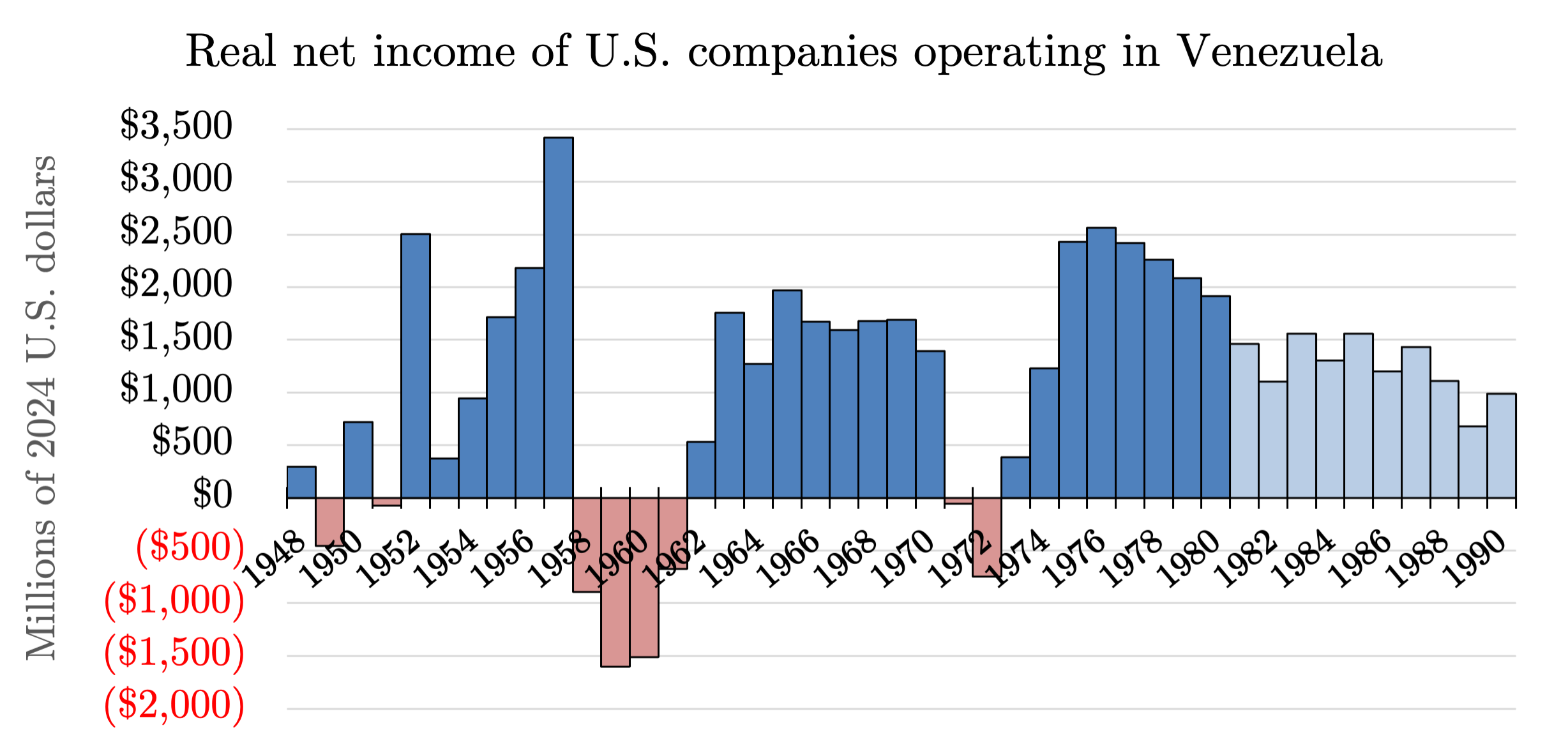
You’ll have to take my word for it that the nationalization of the iron industry was equally fair to American shareholders. (Read my book!)
Unlike Brooklyn, not a whole lot of robbery was going on in the Venezuelan oil sector in the 1970s.
The Bolivarian Revolution
Well, that’s a different story again. Hugo Chávez broke contracts, forced sales, imposed illegal payments, and just plain expropriated businesses right and left. Venezuela never quite toppled over into Cuban-style communism simply because the country’s private sector was too entrenched (and old-fashioned communism too discredited) but it came pretty close.
