

Mexico’s hydrocarbon sector is trouble. Let’s start with the big problem: for the first time ever, Pemex is losing money for the federal government. Here is where the federation gets its revenues, as a share of GDP:
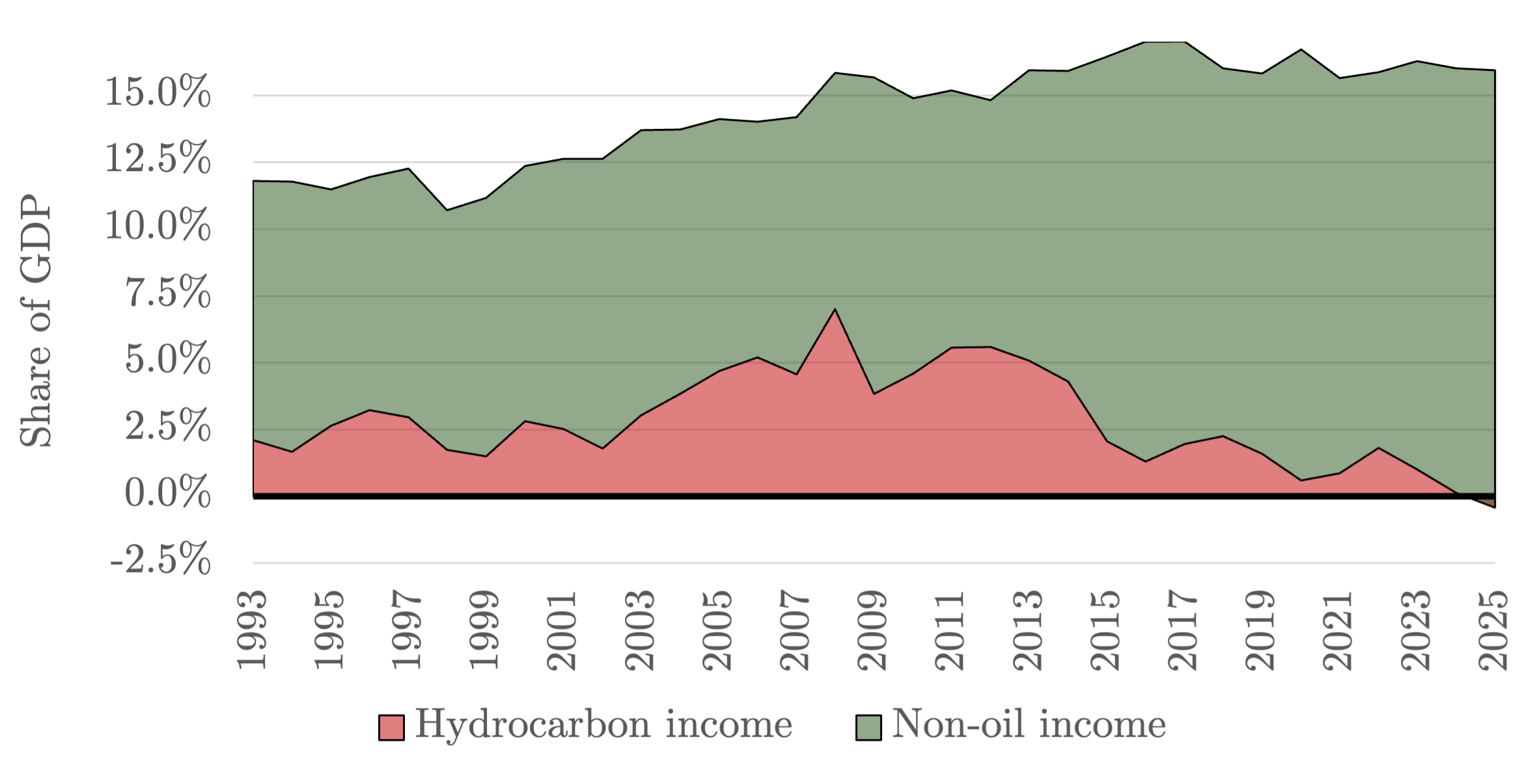
That’s pretty bad. But it gets worse. The country used to make money off fossil fuel exports. Now, though, it exports crude oil but imports even more refined products, measured by value:
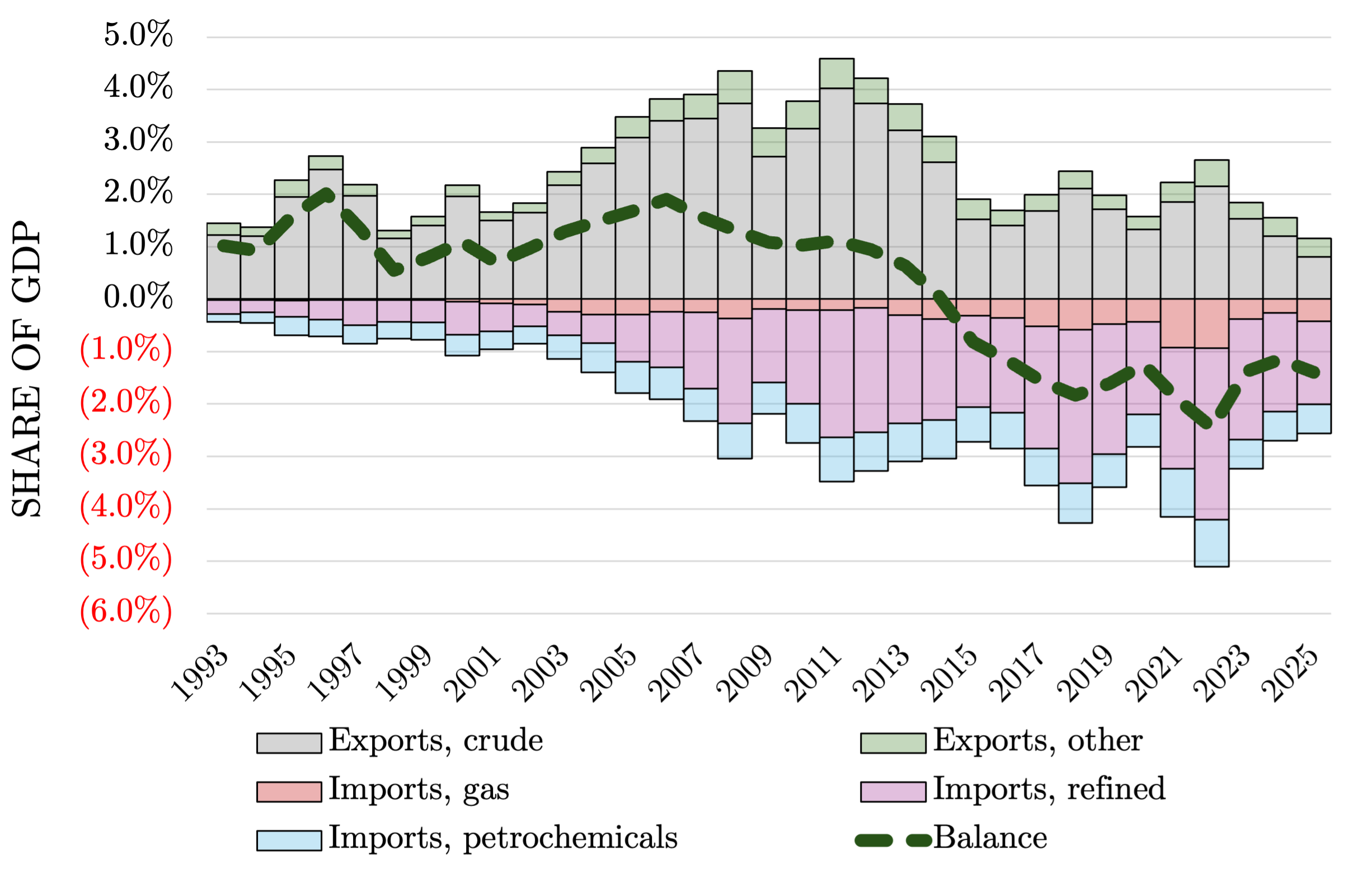
Economically, that’s not a problem. But politically, it is. The Conservation Act of 1975 authorizes the U.S. president to ban hydrocarbon exports. If the U.S. does that, it would take some time for alternative suppliers to Mexico to materialize. In the interim, shortages would idle trucks, clog supply chains, and strand goods — including food. Manufacturing would contract sharply. Farm tractors grind to a halt. Flights would be grounded. Fuel prices would spike, along with the price of food and transport, and inflation would accelerate.
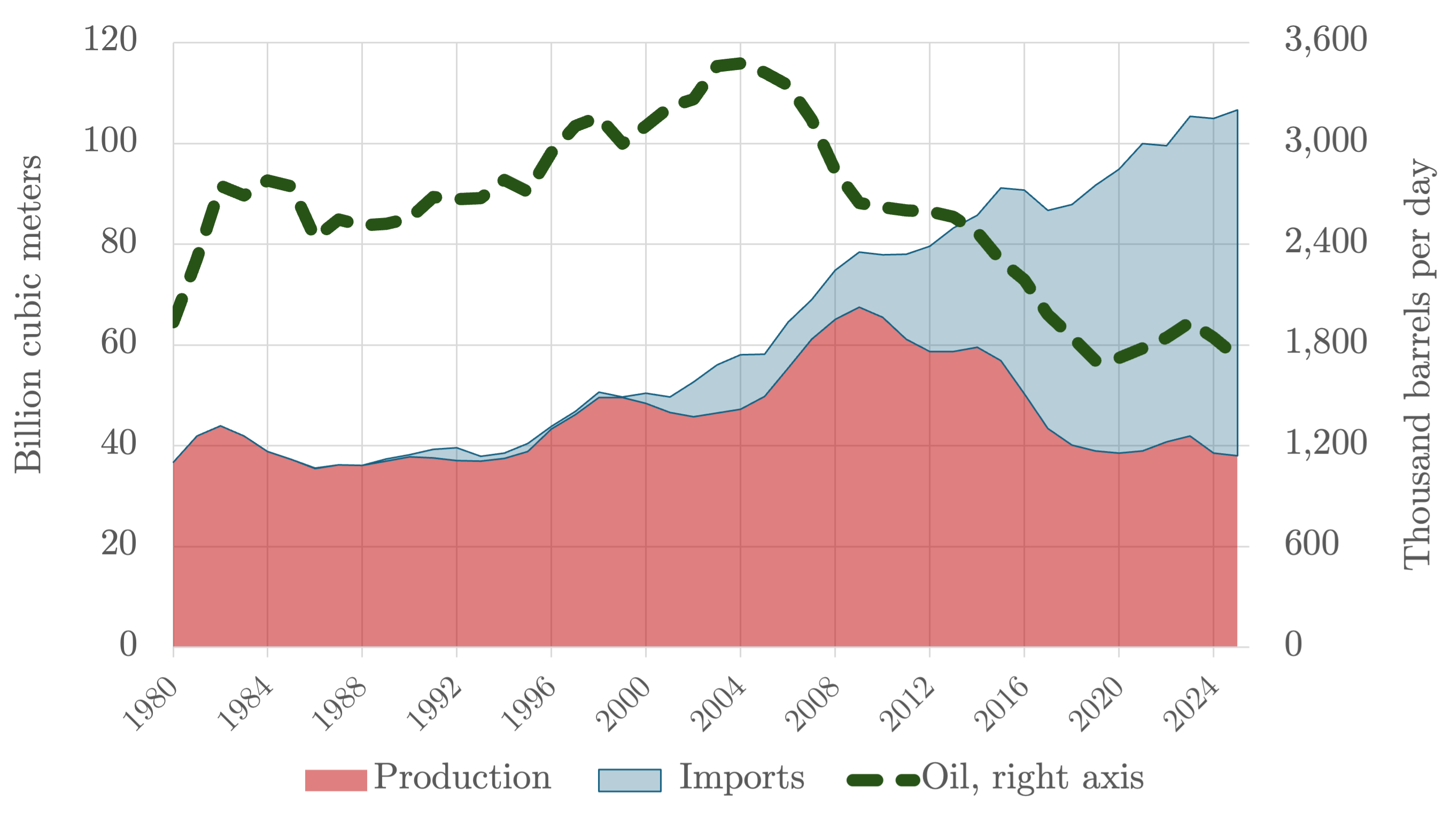
And worst of all, gas-fired power plants would shut down for lack of fuel. Mexico used to be self-sufficient in natural gas. Self-sufficiency ended in 1999, and imports from the United States ballooned after 2011:
So the Sheinbaum administration has multiple reasons to want to resuscitate the hydrocarbon industry. And that’s besides the obvious one, which is, to paraphrase Gordon Gekko, that growth is good.
And the solution? Fracking! Fracking turned the United States into an oil and gas powerhouse. It’s the greatest thing since sliced bread. The Eagle Ford formation slops right over the border and Mexico possesses other potentially productive shale gas and tight oil plays. Solution!

Probably not.
Hold up, wait a minute
There are reasons why the United States dominates fracking worldwide, with only Argentina, Canada, and China providing any serious competition. And most of those reasons aren’t things that the Sheinbaum administration can change with the stroke of a Congressional pen.
