

From the New York Monthly Review of Books (May 1974)
The Monstrous Republic That Never Was
by L.M. Maurer
Two years ago, Robert Sobel published For Want of A Nail. Intended as a summary history for professionals, For Want of A Nail became a minor bestseller in a nation looking to understand its peculiar place in the world and, perhaps more urgently, the continuing dislocations of its western neighbor.
Sobel was highly criticized for what many called an anti-Mexican bias. The book was, in fact, banned from sale in Mexico, which only contributed to its popularity in North America. Sobel’s strong denials of anti-Mexicanism did little to still the criticism. He did, however, admit one prejudice. In a footnote on page 185, easily missed but now endlessly quoted, he wrote: “My own feeling is that a rebel victory would have signaled the beginning of an age of anarchy, in which western civilization might have been crushed.” That quote in a buried footnote, more than any other part of For Want of A Nail, has followed him.
For All Time is Sobel’s answer to those critics, though not in the form anyone expected. It is neither a conventional historical analysis nor a polemical sequel to For Want of a Nail. Rather, it it what the author calls a “counterfactual history.” The phrase is ungainly but accurate. The book is a full-dress history of events that never happened, complete with false footnotes, invented historical personages, and imaginary countries.
The premise is that the rebels are victorious at the Battle of Saratoga. That victory ultimately leads to a British withdrawal from most of North America. A new republic, the “United States of America,” is created along the Atlantic seaboard. Britain retains control of the northern part of the continent, including Quebec and Manitoba, which eventually become the “Dominion of Canada.” The fictional “American” constitution, unimaginatively, resembles the real constitution of the United States of Mexico. George Washington becomes the new country’s first president.
![[Saratoga Monument, Schuylerville, N.Y.] | Library of Congress](https://substackcdn.com/image/fetch/$s_!CYDu!,f_auto,q_auto:good,fl_progressive:steep/https%3A%2F%2Fsubstack-post-media.s3.amazonaws.com%2Fpublic%2Fimages%2Fde6cff75-dd75-4085-81dc-8dd382de2d24_1024x814.jpeg "[Saratoga Monument, Schuylerville, N.Y.] | Library of Congress")
Given Sobel’s apparent priors, one expects the new republic to fall at once into mob rule or anarchy. It does not. Rather, for its first sixty years, the imaginary republic thrives and expands. It even seizes the northern half of Mexico. The prose is dry, with the merest touch of pro-rebellion smuggery, and Sobel handles his invented documentary apparatus with impressive discipline.
The first major turn comes not in North America but in Europe. In Sobel’s construction, the “American” example causes the Paris uprising of 1789 to turn into a generalized social revolution. The monarchy collapses, after which an expansionist regime takes power and plunges Europe into two decades of war. Eventually a British-led coalition restores something resembling the old order.
This is where the Sobel’s thesis becomes clear. In victory, the North American Rebellion becomes more than an isolated colonial event. Rather, it provides an inspiration to revolutionaries everywhere. It also creates a new style of politics: abstract, universal, impatient, and incapable of knowing when to stop. Considering the history of Jefferson and Mexico following the Wilderness Walk, that argument is open to considerable objection, but For All Nails pursues it with vigor.
The chapters that follow are darker. The fictitious “USA,” like the real USM, finds it extraordinarily difficult to deal with the institution of slavery. Unlike the USM, the USA fails catastrophically at peaceful abolition. Rather, slavery provokes increasingly violent disputes between the states that permit it and those that do not. Ultimately, the Southern Confederation (and Jefferson, called “Texas”) attempt to secede. They are reconquered only after a long and bloody war of reconquest that makes the Rocky Mountain War seem like a mere skirmish. More than 300,000 soldiers die, the South is impoverished, and although slavery is abolished de jure in 1865, race relations are permanently poisoned.
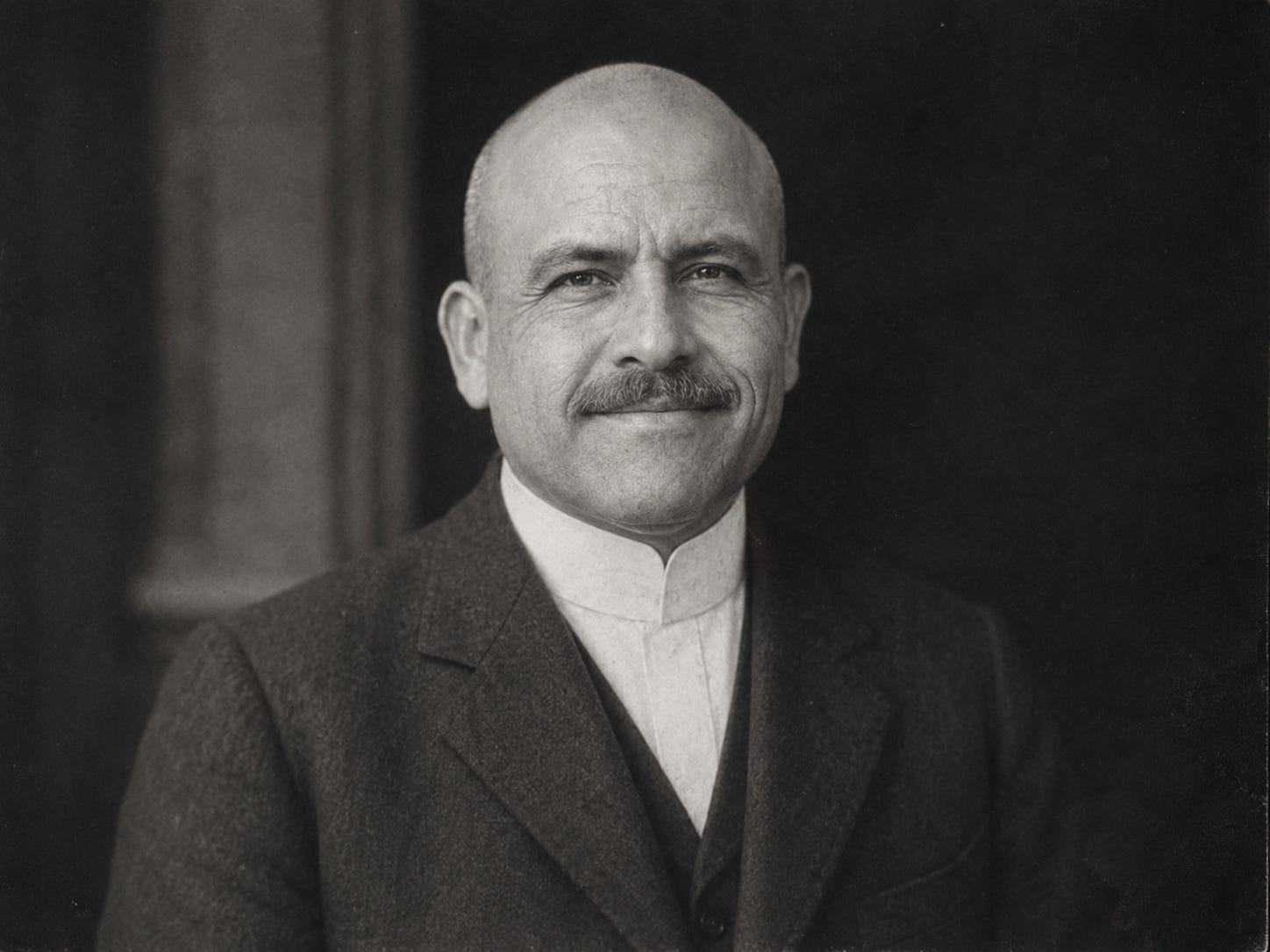
After the war over slavery, For All Time appears, briefly, to relax. America industrializes and Europe enters a period of peace. Liberal institutions spread and trade expands. There are no Bloody Eighties. Sobel writes these pages with a restraint that is almost perversely calm in light of what comes next.
In 1914, Europe collapses into what Sobel calls the “First World War” — the name is as ominous as it sounds, and yes, something worse is coming. Nonetheless, the war is one of the book’s most vivid inventions. Its precocious outbreak means that Sobel’s combatants have neither effective airmobiles nor large motorized formations. The result is a grinding stalemate in which an Anglo-French coalition spends millions of lives against entrenched German lines in the west while the east consumes the Tsarist regime. The USA enters the war in 1917 despite few provocations and no institutional links to Britain. Sobel attributes this to a militaristic streak in his fictitious republic intended to remind the reader of Mexico, albeit at times taken almost to the point of caricature. The Anglo-Franco-American coalition wins, yet the victory is bitter. America retreats into disillusionment. Germany becomes an unstable republic.
The Russian chapters that follow are among the most grotesque. Instead of breaking apart, Russia falls under the control of a coterie of radical socialists calling themselves “Communists.” They proceed to create a dictatorship so absolute that Sobel has to invent a word to describe it: “totalitarian.” The “Communists” construct an omnipresent security apparatus and regularly slaughter their own citizens on a scale that far exceeds Karl Bruning’s worst wartime campaigns.
This is also where Sobel’s habit of escalation begins to strain belief. Each institutional failure is followed by a larger one and each ideology becomes more violent than its predecessor. By the latter third of the book the reader can’t help but start to feel the hand of the author at work.
In his 1929, a series of mistakes by the American central bank turn what
would otherwise be a severe recession into a decade-long economic
catastrophe. The parallel with the 1936-37 downturn is obvious, but Sobel’s invented governments are trapped by their “idealistic” ideological rigidity and prove unable to make the correct pragmatic decisions. Their mistakes compound rather than correct one another. In Germany, the prolonged depression causes a right-wing dictatorship to take power under a madman who preaches racial superiority and rejects the liberal values of the Enlightenment. Across Europe, parliamentary governments fall. In Asia, Japan begins an imperial expansion.
The run-up to the “Second World War” is the weakest section of the book. The USA is drawn in when Japan attacks its Hawaiian possession in 1941. Why Japan would launch a suicidal attack against a much stronger power is never satisfactorily explained. Sobel supplies fictional strategic memoranda, but the decision feels imposed by the author rather than compelled by the world he has built.
Germany’s “National Socialists” follow their ideology of racial hierarchy to a horrifying conclusion: the industrial slaughter of Europe’s Jews in mechanized death camps. Sobel’s description of this imagined nightmare is deliberately cold. His restraint makes the invention more disturbing, although some readers will find it excessive even by the standards of this book. (One has to wonder if his editors asked him to intensify the gruesome episode in order to boost sales.)
The USA and the British Empire align with the brutal Russian dictatorship against Germany and Japan. The war ends only after the USA develops atomic weapons with improbable speed almost two decades before they were actually tested. More improbably, it shares them with its Russian allies. No less than six atomic bombs are used against Germany and Japan.
The postwar chapters are the book’s bleakest. The USA turns inward for a second time. It leaves half the world under Communist domination, from Rome and Berlin in the west to Saigon in the east. The Americans use an atomic weapon to defeat a rebellion in the Philippines. The Russian empire in turn uses atomic weapons to maintain its control over eastern Europe. Western Europe, with no Mason Doctrine to aid recovery, stumbles into poverty, dictatorship, and renewed conflict.
At times the book’s inventions become lurid. France uses atomic weapons indiscriminately to retain its African empire, falls into civil war, and is briefly ruled by an African military officer who declares himself Emperor. Britain, having exhausted itself to defend the empire, faces Irish and Welsh terrorism at home. The USA, having abolished slavery in law but having allowed the southern states to recreate much of it in practice, faces an organized Negro insurgency. A Communist regime in Argentina draws America into another atomic war followed by a long and painful occupation. The rump Mexico falls into disorder and is also partially occupied by the Americans.
By 1971, when the book ends, Sobel’s imagined world is almost beyond repair. The USA is fighting guerrilla wars at home and abroad. The half of Europe not under Russian rule is at war for the third time in a century. Those who live under Russian domination endure a dictatorship so absolute that ordinary political language fails. Millions are dead from not just war and starvation, but industrial extermination, racial pogroms, and, in one of Sobel’s more grotesque conceits ...
From the Philadelphia Examiner (13 May 1974)
The Dream and the Nightmare: Robert Sobel’s Alternate America
by John Dickinson Pez
For anyone who makes history his profession, one of the constant sources of mental stimulation is the recurring question: what if? What if the Moors had beaten the Franks at Tours? What if the Spanish Armada had landed in England? What if Zangora had not killed Pedro Hermión? For every turning point in human history, there is the question of what the consequences would have been had the path not taken been, in fact, taken.
For both North Americans and Mexicans, probably the most popular What If of all is, what if the Continental Congress had won the War of the American Rebellion? Practically every history of that war raises the question. However, few histories do more than simply mention the possibility, and none has attempted more than a few brief generalizations regarding the consequences of an independent American republic. Until now.
This month sees the publication of Robert Sobel’s For All Time, a fully realized imaginary history of a United States of America that secures its independence. Not just an exercise in historical speculation, Sobel’s book takes the form of a scholarly history of the USA, written by a historian native to that country (in fact, written by an alternate version of Sobel himself). From the opening Preface (where the alternate Sobel thanks imaginary American historians, public officials and military officers for reviewing his manuscript) to the concluding bibliography (of imaginary historical monographs and papers that serve as the alternate Sobel’s source material) and index (listing the vast array of imaginary people, places and things mentioned in the text), the illusion is maintained that one is reading a history book from an alternate present.
Although Sobel is primarily a business historian, having authored The Epic Age of North American Industry and Men of Great Wealth: Operations of the Kramer-Benedict Combine, he is best known to the general public for For Want of a Nail, a dual history of the USM and CNA. A comparison between For Want of a Nail and For All Time is apt, for both works begin at the same historical point: the 1763 Treaty of Paris ending the Seven Years’ War between Great Britain and France. From the beginning of For All Time, Sobel is at pains to give his work a tone commensurate with its purported origins. His account of the origins of the American Rebellion contains neither the defensiveness typical of Mexican accounts, nor the more-in-sorrow-than-anger air of North American histories (including his own earlier effort). Instead, the attitude of the author of For All Time is triumphalist. The errors of judgment of the succeeding British ministries of the 1760s and 1770s are given a sinister cast, paralleling the conspiratorial bent of contemporary colonial accounts. The ultimate outbreak of rebellion is seen not only as inevitable, but also as an unmistakably positive development, as though the whole of prior colonial history had been nothing more than a prelude to revolution.
When Sobel launches For All Time into imaginary history, his point of departure is a well-chosen one: the Battle of Saratoga. History records that General Burgoyne’s victory was a narrow one that could easily have gone the other way given minor changes in the rebel strategy. Sobel provides the army of Horatio Gates and Benedict Arnold with those minor changes, and they triumph over Burgoyne. A British army has surrendered in the field, an almost unheard-of disaster. The centers of rebellion in New England and Virginia remain in contact, and General Howe’s capture of Philadelphia is robbed of its significance. George Washington recoups his reputation with a surprise attack on a British garrison in Trenton, New Jersey, and by the spring of 1778 Benjamin Franklin succeeds in persuading King Louis XVI to ally himself with the American rebels and declare war on Great Britain. The surrender of a second British army to the rebels in 1781 results in the fall of the North ministry, and by 1783 the British government has recognized the independence of the American republic.
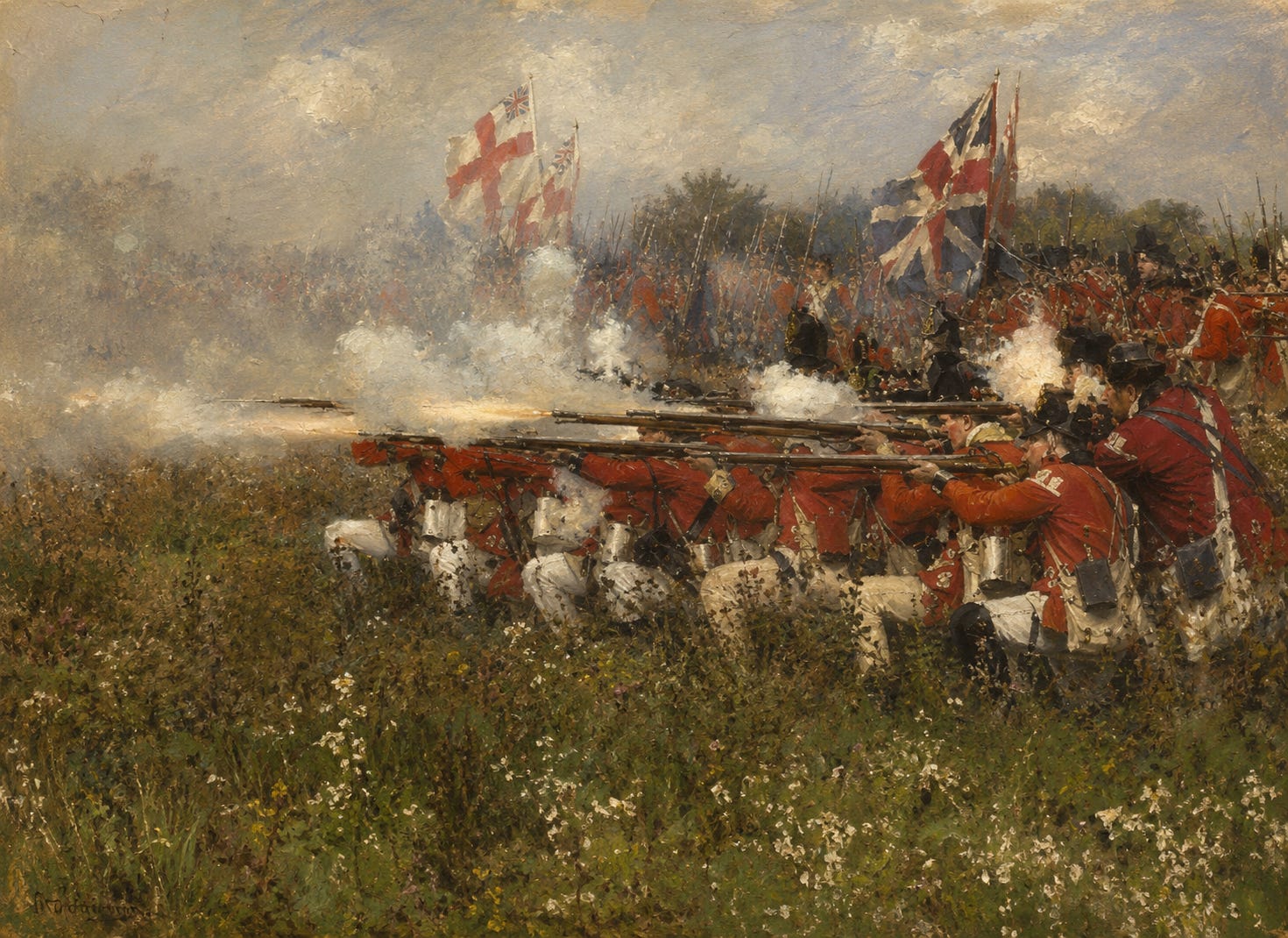
It is at this point that Sobel suffers his first major loss of nerve. Rather than extrapolate a likely future for the newly-independent United States of America based on the trends current in the 1770s, and especially based on the government established by the Continental Congress in 1777 with the Articles of Confederation, Sobel begins to twist events to produce an outcome paralleling actual history. The revolutionary ardor of his American republic is quickly dissipated, and a reaction sets in which results in the adoption in 1787 of a new Constitution which has more in common with the historical Mexican Constitution than with the idealistic principles that produced the rebellion. Samuel Adams and Patrick Henry become marginal figures, Jefferson is eclipsed by Hamilton, and a strangely reactionary George Washington becomes the new nation’s leader.
The result is a peculiar amalgam of the historical USM and CNA. Under its Hamiltonian constitution, the USA lurches from reaction to radicalism and back again. An undeclared naval war with France is followed by an ill-timed declaration of war against Great Britain. The Hamiltonians establish a national bank, which is then allowed to die by a Jeffersonian regime, then resurrected by the Hamiltonians, then allowed to die again by the Jeffersonians.
This national “bipolar disorder” is reflected in the personal relationship between Jefferson and John Adams — friends at the Congress, rivals in Europe, bitter enemies as leaders of rival parties, then friends after retiring from public life. We are expected to believe that the egalitarian antimonarchist Adams becomes a tool of the mercantile elite who seeks to stifle free expression. We are also expected to believe that the firebrand revolutionary and polemicist Jefferson evolves into a dedicated pacifist who allows his nation’s defences to decay into uselessness, while simultaneously being a great statesman who negotiates the peaceful purchase of the Vandalias from Sobel’s Fanchon-analogue. Finally, history records that John Adams and Thomas Jefferson were hanged within hours of each other in December 1778. In For All Time they still die within hours of each other, but Sobel has it occur on the fiftieth anniversary of the Declaration of Independence. (In one of the numerous minor errors with which the book is littered, the Declaration of Independence is signed on the 4th rather than the 2nd of July 1776.)
In Europe, meanwhile, the success of the American rebellion inspires an uprising in France in 1789, which is all too obviously based on the historical French Revolution of 1880, ending with a more successful version of Henri Fanchon who manages to conquer most of Europe before finally being vanquished in 1815. Symptomatic of Sobel’s unwillingness to depart too radically from actual history is the appearance of historical figures such as Queen Victoria, Charles Darwin, Karl Marx and Thomas Edison, despite the decades of altered history that precede their births. Another instance of this failure of imagination is Sobel’s overwhelming use of our own world’s technical and social terminology: telegraph, telephone, phonograph, radio, dynamite, electronic, submarine, white- and blue-collar, GNP, guerrilla, scientist. Sobel’s examples of alternate vocabulary are few: automobile for locomobile, airplane for airmobile, tank for terramobile, television for vitavision.
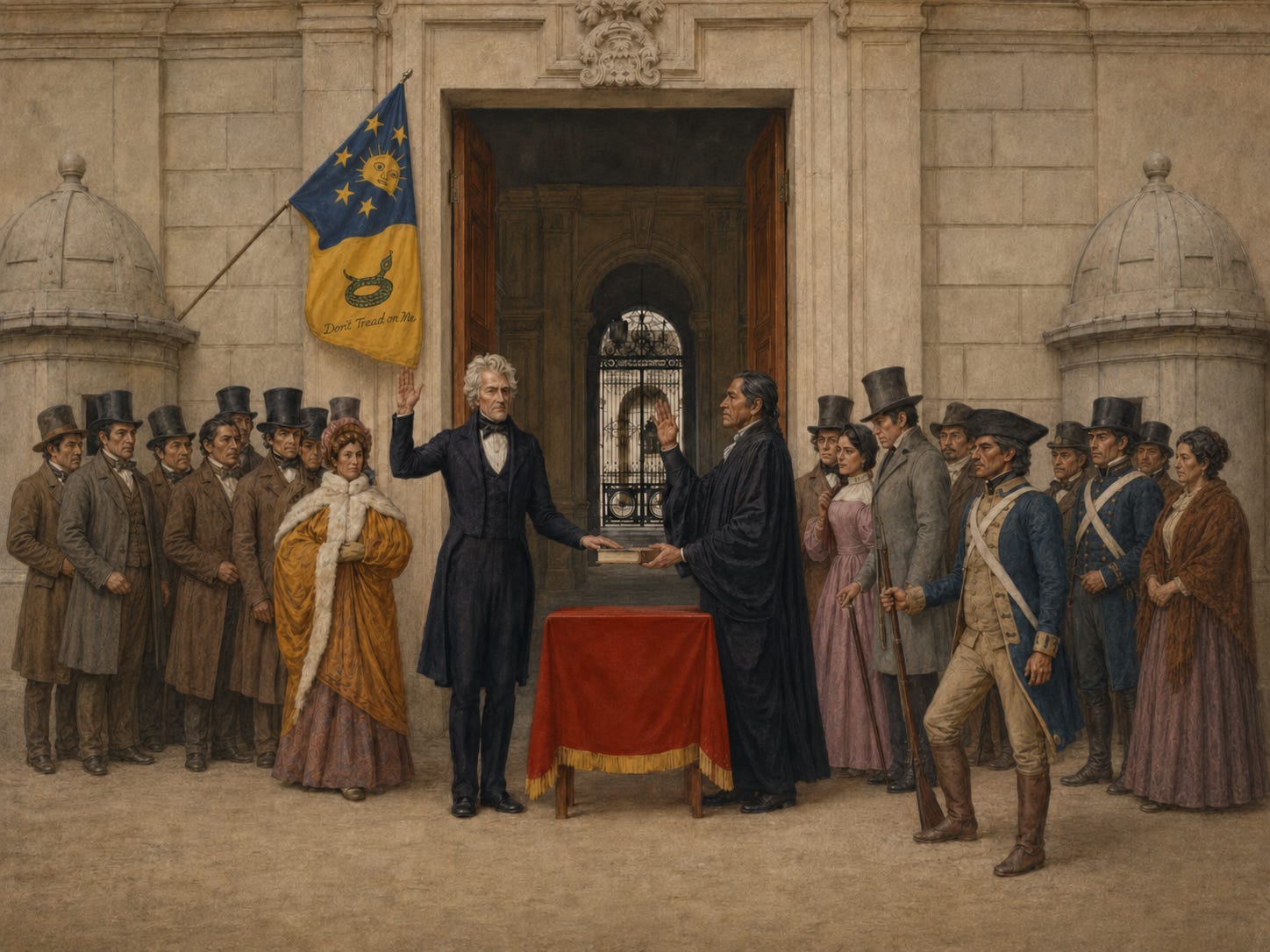
Despite these deficiencies, however, For All Time has its charms. Particularly engaging is Sobel’s portrait of the American government in the first half of the 19th century, where notable North Americans such as Van Buren, Calhoun and Webster rub elbows with Mexican statesmen such as Andrew Jackson and John Quincy Adams. (Amusingly, Sobel depicts Adams as an enemy of Jackson, while Van Buren is Jackson’s handpicked successor as President of the USA.) Sobel’s admiration for Jackson shows clearly: not only does he defeat regular British troops in the 1815 Battle of New Orleans, he voluntarily lays down the office of President after only two terms.
As Sobel’s history moves into the industrial age, however, the author’s distaste for the Mexican elements of his imaginary USA becomes ever more prominent. Slavery persists into the 1860s, and its abolition combines the worst features of the Calles regime and the Rocky Mountain War, as secession by the slave-owners leads to catastrophic civil war, and the victory of the abolitionists is overturned by corrupt politicians who allow the freed slaves to be terrorized into a state of debt-peonage by their former owners. Subsequent attempts by Negroes to regain their freedom are invariably met with renewed oppression, leading to a re-creation of Mexico’s Rainbow War in the USA.
The manner in which Sobel deals with the abolition of slavery in For All Time brings up the related topic of woman suffrage. One of the most serious criticisms directed against For Want of a Nail was the total absence of any discussion of the suffragist movement in the CNA. The reason for Sobel’s reticence is clear enough — embarrassment over the role of his hero Ezra Gallivan in delaying the enactment of woman suffrage for twenty years. Rather than discuss what was probably Gallivan’s least attractive characteristic — his misogynistic feelings towards women — Sobel skips over the whole matter, relegating the enfranchisement of women to a single short sentence in a footnote on page 85.
In For All Time, Sobel makes up for his past reticence with a vengeance, and in a most peculiar way. In Sobel’s USA, the suffragist movement is combined with both abolitionism and the temperance movement. Consequently, when women in the USA do finally win the vote, their enfranchisement comes on the heels of an utterly bizarre constitutional amendment banning the sale of alcohol — a particularly egregious example of misplaced idealism in a book brimming with examples of misplaced idealism.
The twentieth century sees Europe torn apart in a series of bloody wars which give rise to monstrous ideologies -- although, as usual, the ideologies bear an all-too-close resemblance to those of our own world. The class-based theories of Marx are combined with the emotional fervor of Neiderhofferism and the stereotypical tyrannical brutality of Tsarist Russia to produce “Communism”. The racialist policies of modern-day Victoria are taken to an absurd extreme in Germany to produce “Nazism”. Fanchonism is recreated intact in Italy and given the slightly altered name of “Fascism”.
At this point, Sobel gives over all pretense of plausibility. It takes just twenty years for Germany (aided by the abysmally stupid policies of the British and French) to rise from the ashes of a terrible defeat to launch a war of conquest rivalling that of our own world’s Global War. Japan inexplicably veers away from democracy into a dark vortex of militarism, imperialism and cruelty that climaxes in an unprovoked, suicidal attack on the USA, a nation with twice its population and eight times its industrial capacity.
From there, the world of For All Time becomes an escalating nightmare. So frequently do governments slaughter millions of their own citizens that Sobel coins one of his rare neologisms to describe it: genocide. The discovery of atomic weapons in the 1940s results in their widespread use by various nations against armed opponents both foreign and domestic. The end of colonialism in Africa sees the continent dominated by the Union of South Africa, another Victoria analogue based, inexplicably, on our world’s Cape Kingdom. By the end of Sobel’s history in 1971, Europe is reduced to cannibalism, Asia is trapped under a brutal Communist dictatorship, and the USA is consumed by incessant racial strife.
Robert Sobel has gained a popular reputation as anti-Mexican, based largely on For Want of a Nail. In For All Time he makes it clear that that reputation is deserved. Sobel has taken the stereotypical Mexican traits of militarism, racialism, and irresponsible idealism, and made them the defining characteristics of an imaginary dystopia. His USA is meant to be an indictment of the Mexican national character, and of the revolutionary ideals that gave rise to it. In an age when national coexistence has become a matter of human survival rather than lofty idealism, For All Time represents a step in the wrong direction.
John Dickinson Pez is Professor of North American History at Webster University, Newark, Delaware.
From the New York Monthly Review of Books (May 1974), continued
The Monstrous Republic That Never Was, continued
by L.M. Maurer
... state-sponsored cannibalism.
This dark vision stems directly from Sobel’s view of the ideology behind the North American Rebellion. In his view, no ideals can be implemented by revolution without summoning forces beyond anyone’s control. If For All Time has a governing theme, it is an old one: “the road to Hell is paved with good intentions.”
The rebels in North America were, in his account, the most well intentioned of men. Formed by the Enlightenment, they believed in the perfectibility of the human condition. With the right institutions, designed by rational men according to scientific precepts, utopia could be obtained. Sobel quotes the formulation of the famous Mexican historian, Frank Dana: “They believed in free will, held that man could be the master of his fate, rule himself, and wash away the abuses of centuries in a generation.”
In the real world, the utopianism of the refugees who fled Britain’s victory collided with Mexico’s reality: an impoverished land, riven by race and religion. The difficulties of governing a country that was more geographic expression than nation forced the former rebels to abandon much of their abstract program. What emerged instead was a rough and ready pragmatism.
In Sobel’s fictional history, however, the utopians are triumphant and unrestrained by the realities of Hispanic Mexico. Sobel does not argue, absurdly, that Benjamin Franklin or Thomas Jefferson would have advocated the extermination of entire ethnic groups or social classes. He does, however, appear to believe that the radical utopianism of his “totalitarians” draws from the same philosophical well as the idealism of the North American rebels. When liberty fails to produce justice, the humanists inspired by Saratoga become more radical in their pursuit of perfection. “Washing away the abuses of centuries” merely requires ever harder scrubbing. Everything becomes justifiable, for how can utopia for all time to come be weighed against mere transient short-term costs?
The opposite nightmare then appears. Sobel’s “Nazis” are not treated as an accident or a German pathology. Rather, they are the inevitable counter-revolution against Enlightenment liberalism: racialist, anti-rational, and hierarchical. Thus Sobel links the rise of inhuman ideologies in the Old World to the triumph of their warm and humanistic, but ultimately failed, predecessor in the New.
Many critics have taken For All Time as an indictment of the Mexican national character. This reviewer disagrees. The book implicitly argues that the real United States of Mexico, unlike Sobel’s fictional United States of America, learned to put aside ideology and solve its problems pragmatically. Indeed, the final chapters read almost as an apologia for the Mercator dictatorship. When Mexico was consumed by racial strife and corrupted politics in the 1940s, it put ideology aside and did what was necessary to restore order. When similar strife reaches Sobel’s imaginary America, the nation refuses to compromise its principles, and the violence escalates without limit.

For All Time is, for all its faults and its highly unorthodox premise, a serious attempt to explore the philosophical roots of political ideology. It is also, in this reviewer’s opinion, a backhanded compliment to Mexico: a country that began with far fewer advantages than Sobel’s fictional America and has done rather more with them. Perhaps fiction can provide a mirror that ordinary history cannot. North Americans, looking into Sobel’s monstrous republic, may learn to see their western neighbor more clearly.
Leon Moisés Maurer is Reader in Modern History at King’s College, Burgoyne, Pennsylvania.